Most people who buy property in the Dominican Republic close successfully. They never have a problem. But the deals that go wrong tend to go very wrong. They almost always share the same pattern: a foreign buyer in a hurry, an informal process, and nobody on the buyer's side checking the paperwork. This guide walks through the eight most common Dominican Republic real estate scams, the red flags that expose them, and the seven-step defense that defeats nearly all of them.
The DR has no real estate licensing requirement. Anyone can call themselves an agent, hand out a business card, and start showing properties. That isn't a flaw you can fix by "finding a licensed agent." There's no license to find. Instead, the country has a voluntary professional body called AEI (Asociación de Empresas Inmobiliarias). Membership is optional, but it's one of the few outside signals that an agency takes the work seriously. The fix for an unregulated agent market isn't paranoia. It's process. If you follow the how to buy property in the Dominican Republic playbook — independent attorney, registered title, escrow, written contracts — the scams below mostly run out of room to operate.
The 8 Most Common Dominican Republic Real Estate Scams
View text version of this infographic
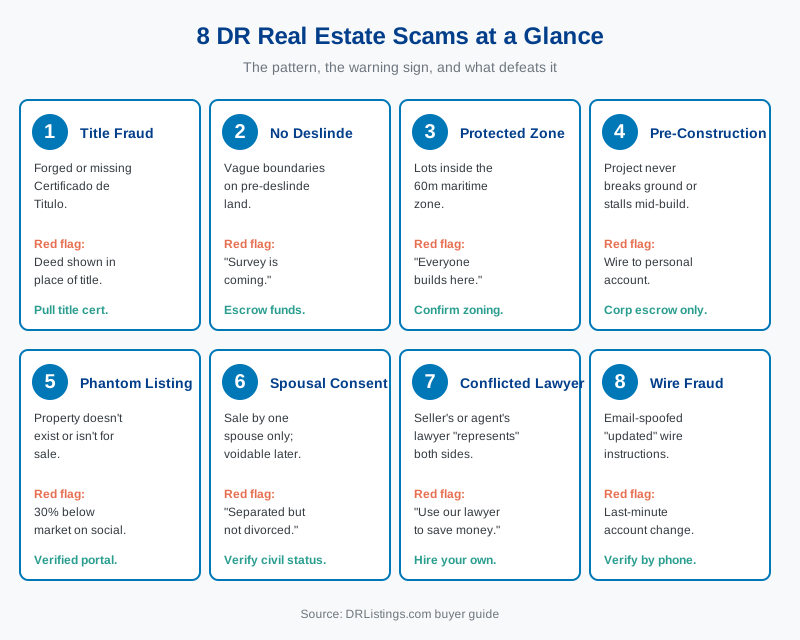
The 8 DR real estate scams at a glance — pattern, red flag, and defense:
- Title Fraud — Forged or missing Certificado de Título. Red flag: a deed shown in place of a registered title. Defense: pull the title certification.
- No Deslinde — Vague boundaries on pre-deslinde land. Red flag: "the survey is coming." Defense: escrow funds until the deslinde is granted.
- Protected Zone — Lots inside the 60-meter maritime zone. Red flag: "everyone builds here." Defense: confirm zoning with the municipality and Ministry of Environment.
- Pre-Construction — Project never breaks ground or stalls mid-build. Red flag: wire to a personal account. Defense: corporate escrow only.
- Phantom Listing — Property doesn't exist or isn't for sale. Red flag: 30% below market on social media. Defense: verify against an established portal.
- Spousal Consent — Sale signed by one spouse only; voidable later. Red flag: "separated but not divorced." Defense: verify civil status before closing.
- Conflicted Lawyer — Seller's, developer's, or agent's lawyer "represents" both sides. Red flag: "use our lawyer to save money." Defense: hire your own.
- Wire Fraud — Email-spoofed "updated" wire instructions. Red flag: last-minute account change. Defense: verify every wire by phone.
1. Title Fraud (Missing or Forged Certificate of Title)
The Dominican Republic uses a Torrens-style title system. The single source of truth for who owns a property is the Certificado de Título issued by the Registro de Títulos. A scam seller will instead show you a deed (an act of sale), a tax receipt, or a notarized declaration and tell you that's proof of ownership. It isn't. Variations include forged certificates, real certificates with hidden liens or mortgages, and sales by someone who isn't actually the registered owner. That person is often a relative, neighbor, or "caretaker" of the real owner.
The defense is simple and non-negotiable. Your attorney pulls a Certificación del Estado Jurídico del Inmueble straight from the Registro de Títulos. That document shows the current registered owner, any encumbrances, and any pending litigation. If the name on it doesn't match the seller, walk. If the seller refuses to share enough information for your lawyer to pull it, walk faster. Buyers who want a belt-and-suspenders option can also look at title insurance in the Dominican Republic.
2. Missing or Invalid Deslinde
A deslinde is the modern legal survey that fixes a property's exact boundaries and registers them under the Torrens system. Older rural and inherited land often predates this process. It sits on a "pre-deslinde" title that describes the property in vague terms ("bordered by the river to the north, by Juan's land to the east"). That's a recipe for fraud. Two neighbors can both hold paperwork claiming the same hillside, and the dispute can take years to resolve.
If the property doesn't have a registered deslinde, treat the deal as land speculation, not a home purchase. Either insist that the seller complete the deslinde before closing, or escrow the purchase funds until it's granted. Never wire the full purchase price for pre-deslinde land on a verbal promise that "the survey is coming." Your Dominican Republic property due diligence checklist should make this a hard checkpoint.
3. Protected Zone and Beachfront Setback Sales
Dominican law restricts private construction within 60 meters of the high-tide line on the coast. It also restricts building inside Zonas Protegidas around rivers, wetlands, environmental reserves, and military or historical sites. The scam: a seller markets a "beachfront lot" or sells you a finished villa whose footprint is partly inside the protected zone. The structure may be tolerated for years. Then it gets ordered demolished — with no compensation — once the Ministry of Environment notices.
Before you sign anything on a coastal or rural lot, have your attorney confirm zoning with the municipality and with the Ministry of Environment. Ask specifically whether any part of the parcel falls inside the 60-meter maritime-terrestrial zone or any other protected designation. "Everyone builds here" is not a defense in court.
4. Pre-Construction Project Scams
Pre-construction is where the largest dollar losses tend to happen. The pattern: a developer with no completed projects opens a sales office, posts glossy renderings, promises "guaranteed 12% rental returns," and asks for 30% down wired to a personal account. The project either never breaks ground, runs out of money halfway through, or finishes years late with units that don't match what was sold.
Real developers have a track record you can verify, permits you can pull, and a corporate escrow account at a Dominican bank. Many legitimate tourism-zone projects are also registered under CONFOTUR for tax incentives. Registration isn't a fraud guarantee, but it's a signal that the project has cleared a meaningful approval bar. Read more on the CONFOTUR program and on pre-construction vs pre-built homes before you put money down. If the developer wants the deposit wired to a personal name rather than a corporate escrow, the answer is no.
5. Fake Listings and Phantom Properties
This is one of the most common Dominican Republic property scams online. It usually starts on Facebook Marketplace, WhatsApp groups, or unbranded "deal of the week" emails. The listing shows a beautiful villa at 30% below market. The "agent" is responsive, friendly, and very motivated. They ask for a deposit to "hold the property" before you fly down. The property either doesn't exist, was sold years ago, or belongs to someone who has no idea it's being marketed.
Verify every listing against a legitimate portal. Insist on an in-person showing, or at minimum a live video walkthrough by an agent whose agency has a physical office and phone number you can independently confirm. Never wire a deposit to a person you've only met by WhatsApp.
6. Spousal Consent Fraud (Bien de Familia)
Under Dominican community-property rules, real estate acquired during a marriage generally belongs to both spouses. A sale signed by only one spouse without the other's consent can be voided in court, even years later — including against an innocent buyer. The fraud version: a separated-but-not-divorced seller sells the marital home, pockets the cash, and disappears. The non-signing spouse then sues the new "owner" to unwind the sale.
Your attorney's job here is to verify the seller's civil status: marriage certificate, current marital regime, and (if applicable) divorce judgment. If the seller is married, both spouses sign the deed of sale before a notary. If the seller claims to be single, the attorney verifies it rather than taking their word for it.
7. Conflicted Legal Representation
The single biggest mistake foreign buyers make is "saving money" by using the seller's lawyer, the developer's lawyer, or the agent's recommended lawyer to handle both sides. That lawyer's economic incentives are aligned with closing the deal, not with protecting you from a problem inside the deal. They will not look hard for liens, boundary disputes, or zoning issues, because finding one ends the closing and their fee.
Hire your own independent counsel. Plan to spend roughly 1% to 1.5% of the purchase price on a Dominican real estate attorney, paid by you, working for you only. Our guide walks through what to look for and what questions to ask in the first call.
8. Wire Fraud at Closing (Email Interception)
This is the fastest-growing real estate fraud in North America, and it works the same way in the DR. Two days before closing, you receive an email that looks like it's from your attorney. The wording is normal, the signature block matches, and the message says wire instructions have been "updated." The new account belongs to a criminal who has been quietly reading your email thread for weeks. The money leaves your bank, hits an overseas account, and is gone within hours.
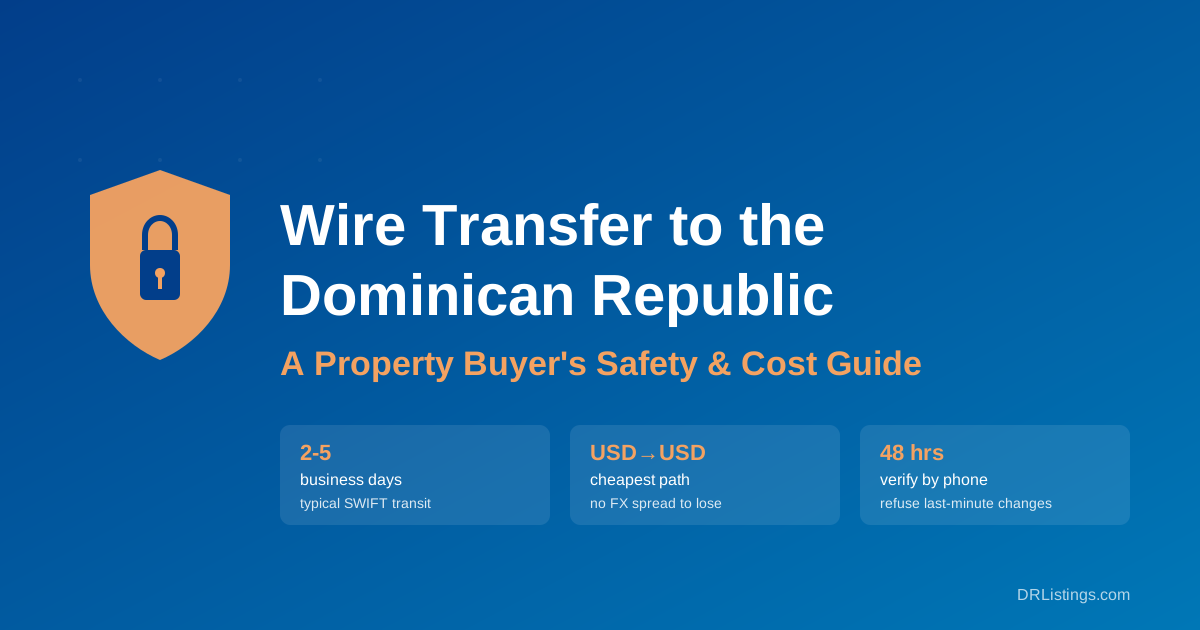
The defense is procedural. Never act on wire instructions received only by email. Confirm every wire instruction by phone, using a number you had before the email thread started. Do not use a number from the email itself. Use a licensed escrow agent for Dominican Republic real estate rather than wiring directly to a seller or attorney. And read our guide on how to wire money safely for Dominican Republic property before closing day, not on it.
The Diaspora Trap — Scams Targeting Dominican-Americans and Remote Buyers
In 2024, the New York Attorney General and Congressman Adriano Espaillat issued a public warning about real estate scams aimed at Dominican-Americans buying property back home. The pattern is specific: a relative, family friend, or "trusted" connection in the DR offers to handle the purchase on the buyer's behalf. To "save money," the deal happens in cash, with no formal contract, no escrow, and no registered title transfer. Months or years later, the buyer discovers the property was never put in their name, was already mortgaged, or never existed.
If you're buying remotely, your due-diligence standards have to go up, not down — even when the seller is family. Use a written contract. Use escrow. Get the Certificate of Title issued in your name at the Registro de Títulos before any final money moves. Trust is a wonderful basis for a relationship, but it is not a substitute for paperwork.
Universal Red Flags — Walk Away If You See These
These are the universal Dominican Republic property scams red flags that should stop a deal cold:
- Pressure to wire funds the same day or skip due diligence steps.
- Cash-only deals or large discounts in exchange for paying cash.
- A seller who is "out of the country" and can't appear at closing or sign before a notary.
- Refusal to share the Certificate of Title before you put down a deposit.
- One lawyer representing both buyer and seller.
- Wire instructions that change by email in the final days before closing.
- Verbal-only rental income guarantees, especially round numbers like "10% per year, guaranteed."
- A property listed significantly below market with vague reasoning ("the owner is in a hurry").
Any one of these alone is a reason to slow down. Two together is a reason to walk.
The Defense Playbook — A 7-Step Process That Defeats Every Scam Above
View text version of this infographic
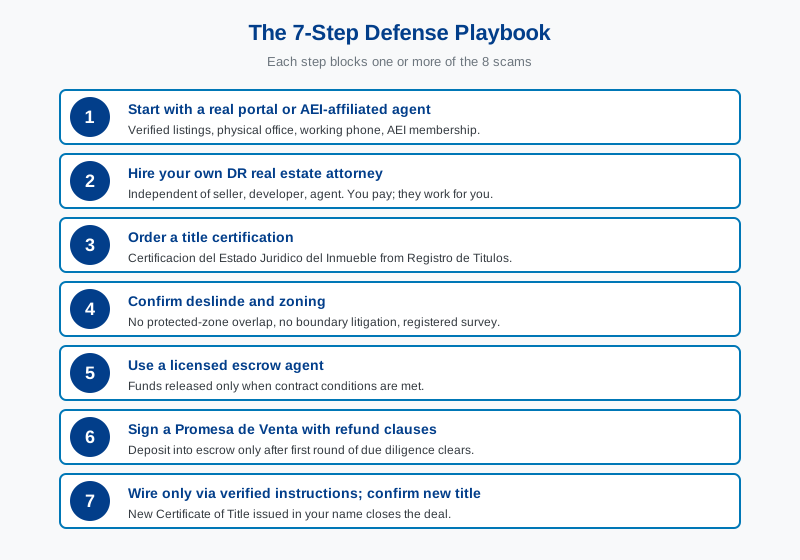
The 7-Step Defense Playbook:
- Start with a real portal or AEI-affiliated agent — verified listings, physical office, working phone, AEI membership.
- Hire your own DR real estate attorney — independent of the seller, developer, and agent. You pay them; they work for you.
- Order a title certification — Certificación del Estado Jurídico del Inmueble from the Registro de Títulos.
- Confirm deslinde and zoning — registered survey, no protected-zone overlap, no boundary litigation.
- Use a licensed escrow agent — funds released only when contract conditions are met.
- Sign a Promesa de Venta with refund clauses — deposit into escrow only after first round of due diligence clears.
- Wire only via verified instructions and confirm new title — a new Certificate of Title in your name closes the deal.
- Start with a real portal or AEI-affiliated agent. A verified listing on an established platform is harder to fake than a Facebook post. Cross-check the agency: physical office, working phone, AEI membership.
- Hire your own Dominican real estate attorney. Independent of the seller, the developer, and the agent. Pay them yourself.
- Order a title certification. The Certificación del Estado Jurídico del Inmueble from the Registro de Títulos confirms the registered owner and any encumbrances.
- Confirm deslinde and zoning. No deslinde, no protected-zone overlap, no pending boundary litigation. Use the property inspection guide for the physical side.
- Use a licensed escrow agent. Funds sit in escrow until conditions are met. The seller doesn't see your money before you see clean paperwork.
- Sign a Promise of Sale (Promesa de Venta) with refund clauses. The deposit is paid into escrow only after the first round of due diligence clears. The full DR property closing process walks through the document chain.
- Wire only via verified instructions, and confirm title transfer. At closing, you receive a new Certificate of Title in your name from the Registro de Títulos. Until you hold that document, the deal isn't done. Set up your local banking ahead of time using our guide to open a DR bank account.
What to Do If You've Already Been Scammed
Speed matters. The first 72 hours are the only realistic window to recover wire-fraud funds before they disappear through international accounts.
- Wire fraud: Call your sending bank immediately and request a SWIFT recall. Then file an FBI IC3 report (for U.S. senders) or your country's equivalent.
- Title or deposit fraud: File a denuncia (criminal complaint) with the Ministerio Público (Public Ministry) in the jurisdiction where the property sits.
- Specialized prosecutor: Report the case to the Procuraduría Especializada en Persecución de Crímenes Patrimoniales, which handles property-crime cases.
- Civil recovery: Hire a Dominican litigation attorney quickly. Civil claims tied to real estate fraud have limitation periods, and waiting can extinguish your right to sue.
- Document everything: Wire confirmations, every email and WhatsApp thread, the listing screenshot, the contract, the receipts. Cases turn on documentation.
This article is general information, not legal advice. If you've been targeted, talk to a Dominican attorney before making decisions about reporting, settlement, or litigation.
Frequently Asked Questions
Is real estate in the Dominican Republic safe for foreigners? Yes — for buyers who follow the standard process. Foreign ownership is fully legal, the title system is reliable for properly registered properties, and most transactions close without incident. The fraud cases tend to involve buyers who skipped independent counsel, escrow, or title verification. Read is the Dominican Republic safe for broader country context.
What is a deslinde, and why does it matter? A deslinde is the modern legal survey that fixes a property's exact boundaries and registers them under the Torrens-style title system. Without a registered deslinde, the property's borders rest on older, less precise descriptions that are easier to dispute. Buying pre-deslinde land is buying litigation risk.
Do I need a lawyer to buy property in the Dominican Republic? Practically, yes. There is no legal requirement that a buyer use an attorney. But every meaningful defense against the scams above runs through an independent Dominican real estate attorney pulling documents from the Registro de Títulos and the Ministry of Environment. The 1% to 1.5% you'll spend on legal fees is the cheapest insurance in the deal.
Can a foreigner own beachfront property in the Dominican Republic? A foreigner can own coastal property, but no private party — Dominican or foreign — can build on the 60-meter maritime-terrestrial zone measured from the high-tide line. "Beachfront" parcels typically include a buildable area set back from the water. Verify zoning before you assume the lot can be developed end to end.
How do I verify a real estate agent in the Dominican Republic? The DR has no licensing requirement, so there is no government registry to check. Look instead for AEI membership, a physical office address you can visit, a working phone number, a verifiable track record of recent closings, and references from past foreign buyers. Cross-check listings against established portals.
What is the AEI and why does membership matter? AEI (Asociación de Empresas Inmobiliarias) is the country's voluntary professional association of real estate firms. Membership signals that a firm has chosen to abide by industry standards on ethics, contracts, and continuing education. It's not a guarantee, but it's a meaningful filter in an otherwise unregulated market.
How do I check if a Dominican Republic property has a clear title? Your attorney requests a Certificación del Estado Jurídico del Inmueble from the Registro de Títulos. That document shows the current registered owner, mortgages, liens, and pending litigation tied to the parcel. If the certification doesn't match what the seller is telling you, the seller is wrong.
Should I use escrow when buying property in the Dominican Republic? For any meaningful purchase, yes. Escrow puts your funds in a neutral third party's account and releases them only when conditions in the contract are met. It defeats most pre-construction fraud, deposit fraud, and last-minute wire fraud scenarios.
What is CONFOTUR and does it protect buyers? CONFOTUR is a tourism-incentive program that gives qualifying projects tax benefits, including exemptions on transfer tax and property tax. CONFOTUR registration signals that a project has cleared a real approval process, which is useful as a legitimacy filter — but it isn't fraud insurance. You still need independent due diligence on the developer and the title.
What should I do if I've been scammed buying property in the Dominican Republic? Move fast. Contact your sending bank to attempt a wire recall, file a denuncia with the Ministerio Público, report to the Procuraduría Especializada en Persecución de Crímenes Patrimoniales, and hire a Dominican litigation attorney to evaluate civil recovery. Document every email, message, and receipt. Time is the variable that matters most.
David Logan
site_adminContributing writer for DRListings.com, sharing insights about Dominican Republic real estate.
Comments
Log in to join the conversation