If you are an American or Canadian buyer wiring six figures across a border to a country you may have only visited on vacation, escrow is the single most important protection in the deal. Escrow in Dominican Republic real estate means a neutral third party holds your deposit until the title checks out and both sides sign the final contract. That third party is usually a lawyer's trust account or a dedicated title company.
In the DR, the escrow agent is typically a licensed attorney or a title company such as Secure Title Latin America (formerly Stewart Title Latin America). The agent holds the buyer's deposit (usually 10% of the purchase price) until the title is verified and the final contract is signed. Funds are released only when all closing conditions are met.
Below is a plain-English walkthrough of how escrow works in a DR purchase: what it costs, when your deposit stops being refundable, and how to dodge the wire-fraud and paperwork mistakes that catch first-time foreign buyers. If you are still earlier in the process, the broader how to buy property in the DR guide walks through the full timeline. This post zooms in on the money side.
Is Escrow Legally Required in the Dominican Republic?
Short answer: no. The DR does not have a statute equivalent to the US Real Estate Settlement Procedures Act (RESPA). There is no national escrow-licensing regime, and no government agency you can call to confirm a particular escrow agent is bonded and audited.
That sounds alarming, but it is also why escrow shows up in nearly every serious foreign-buyer transaction. Because the system is not enforced from above, it has to be built into the contract from below. Funds are typically held by one of two parties:
- A Dominican attorney's professional trust account, opened on behalf of the deal.
- A dedicated escrow or title company that specializes in cross-border real estate.
"Not legally required" is not the same as "optional." Skipping escrow on a DR purchase, even a cash deal between two well-intentioned parties, leaves the buyer with almost no recourse if the title turns out to have a problem after the deposit is paid. The cost of escrow is small relative to the cost of a deposit you cannot get back.
The Two Main Escrow Options
Most buyers will choose between an attorney trust account and an independent title company. Both can work. The right choice depends on deal size and how independent you need the holder to be.
Attorney trust account. Many Dominican law firms that represent foreign buyers will open a trust account in either a local or US bank to hold the deposit. This is the most common setup for deals under about $500,000. It is cheaper, faster to set up, and the same lawyer is usually doing your title due diligence anyway. The downside is independence: if a dispute arises, your money is sitting with the same firm that drafted your contract.
Independent escrow / title company. Companies like Secure Title Latin America (formerly Stewart Title Latin America) operate specifically as neutral fund-holders and title insurers. They are more expensive, but they hold funds in segregated accounts that are not connected to either side's law firm, and they typically issue title insurance policies that US lenders recognize. For higher-value deals, pre-construction purchases, or any deal where the buyer wants belt-and-suspenders protection, this is the stronger choice.
| Factor | Attorney trust account | Independent escrow / title company | |---|---|---| | Typical fee | Often bundled into 1% legal fee | 0.5%–1% of price or $1,500–$3,000 flat | | Independence | Tied to buyer's law firm | Fully neutral third party | | US bank option | Common | Standard | | Title insurance | No | Yes | | Best for | Standard deals under ~$500K | Larger deals, pre-construction, financed deals |
How the Money Actually Moves, Step by Step
This is where most competing articles wave their hands. Here is the actual sequence of money movement in a typical DR purchase.
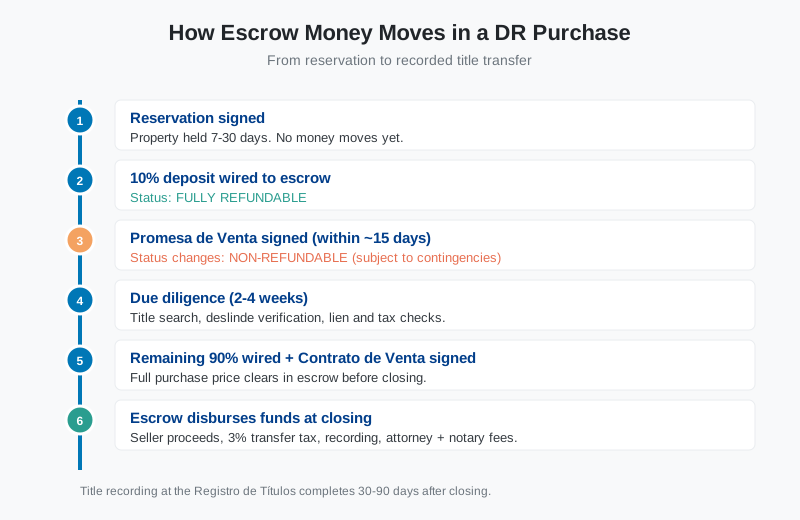
View text version of this infographic
How escrow money moves in a DR purchase, from reservation to recorded title transfer:
- Reservation signed. Property held 7-30 days. No money moves yet.
- 10% deposit wired to escrow. Status: fully refundable.
- Promesa de Venta signed within ~15 days. Status changes to non-refundable, subject to contingencies.
- Due diligence period of 2-4 weeks. Title search, deslinde verification, lien and tax checks.
- Remaining 90% wired and Contrato de Venta signed. Full purchase price clears in escrow before closing.
- Escrow disburses funds at closing: seller net proceeds, 3% transfer tax, recording fees, attorney and notary fees.
Title recording at the Registro de Títulos completes 30-90 days after closing.
1. Reservation form or offer signed. You and the seller sign a short reservation agreement that takes the property off the market for a defined window, usually 7 to 30 days.
2. Deposit wired to escrow. The buyer wires the deposit, traditionally 10% of the purchase price, to the agreed escrow account. At this stage the money is fully refundable. If the buyer walks away before the next document is signed, the deposit comes back (minus wire fees).
3. Promesa de Venta signed within ~15 days. The Promesa de Venta, literally "Promise of Sale," is the binding initial contract. It locks in price, closing date, and contingencies (clean title, deslinde, financing if applicable). Once both parties sign, the deposit becomes non-refundable, subject only to the contingencies written into the contract.
4. Due diligence period. The buyer's attorney pulls the title certificate from the Registro de Títulos (the national title registry), verifies the deslinde (an official boundary survey confirming the property's exact location and size), checks for liens, and confirms property taxes are current with the Dirección General de Impuestos Internos (DGII). This usually takes two to four weeks.
5. Final Contract of Sale (Contrato de Venta). Once due diligence clears, both parties sign the Contrato de Venta in front of a Dominican notary. This is the document that actually transfers ownership.
6. Balance wired into escrow. The buyer wires the remaining 90% before the closing date. Many escrow agents will not release any funds until 100% of the purchase price has cleared in the account.
7. Escrow disburses funds. On closing day, escrow sends out:
- Net proceeds to the seller
- 3% transfer tax to DGII
- Recording fees to the Registro de Títulos
- Attorney fees (typically ~1% of price)
- Any agreed-upon closing costs
8. Title transfer recorded. The notarized Contrato de Venta and proof of tax payment are filed at the Registro de Títulos. The new Certificate of Title in the buyer's name is typically issued within 30 to 90 days, depending on the province.
Typical Timelines
Foreign buyers consistently underestimate how long Dominican closings take. Here is what to plan for:
- Reservation to deposit wire: 1–3 business days.
- Deposit to Promesa de Venta: within 15 days.
- Due diligence: 2–4 weeks.
- Promesa de Venta to closing: 30–60 days for most cash deals; up to 90+ days if financing is involved.
- Final title recording at the Registro de Títulos: 30–90 days after closing.
Clean cash deals with no title complications can occasionally close in 5–10 days, but anyone selling you a guaranteed one-week closing on a foreign-buyer purchase is glossing over real risk. If you are also working through a Dominican Republic mortgage for foreigners, add another 30–60 days for the bank's underwriting.
Costs Associated with Escrow
Closing costs in the DR run higher than many buyers expect. Here is a consolidated breakdown of every fee that typically flows through the escrow account at closing.
| Item | Typical Range | Who Pays | |---|---|---| | Escrow / title company fee | 0.5%–1% of price (or $1,500–$3,000 flat) | Buyer (negotiable) | | Attorney fees (legal review + closing) | ~1% of sale price | Buyer | | Property transfer tax | 3% of appraised value | Buyer | | Title recording / Registro de Títulos | ~$200–$500 | Buyer | | Incoming/outgoing wire fees | $25–$75 each | Each party | | Notary fees | $100–$400 | Buyer (typically) |
A few notes for budgeting:
- The 3% transfer tax is calculated on the value the DGII assigns to the property, which is sometimes lower than the contract price. Your attorney will know the appraised figure once they pull the records.
- Properties registered under the CONFOTUR tourism incentive law can qualify for a full exemption from this 3% transfer tax for the first transfer. If you are looking at CONFOTUR properties, this is one of the headline benefits. See the CONFOTUR tax benefits breakdown for the full picture.
- Plan for total closing costs of roughly 4.5%–6% of the purchase price on top of the price itself.
What If the Deal Falls Apart?
Most don't, but you need to know the unwind path before you wire any money. Three scenarios cover most broken deals.
Failed title or deslinde issue. If due diligence turns up a title cloud, an unregistered boundary, or a lien the seller cannot clear, your contract should treat this as a contingency failure. The deposit comes back to you, less any non-refundable third-party costs already incurred (like the title search itself).
Seller default. If the seller refuses to close after the Promesa de Venta is signed, say, they get a higher offer, the deposit returns to the buyer. Most well-drafted contracts also include a penalty clause requiring the seller to pay an equal amount as damages.
Buyer default after the non-refundable date. If the buyer changes their mind after Promesa de Venta and there is no contingency to lean on, the deposit is forfeited to the seller. This is the most expensive way to learn the rules.
The single most important practical step is to read your Promesa de Venta carefully. Make sure refund triggers and seller-default penalties are spelled out in writing. If your attorney glosses over this section, ask for it in plain language before you sign.
Choosing a Trustworthy Escrow Provider, Checklist
Use this checklist when vetting whoever will hold your money.
- Independent of both agents. The escrow agent should not be the seller's attorney, the seller's recommended attorney, or a relative of either side's representative.
- Segregated account. Your funds should sit in a named account separate from the firm's operating funds. For foreign-buyer deals, this is often a US bank account, which simplifies the wire and adds a layer of US regulatory oversight.
- Written wire instructions on letterhead. Real escrow agents send wire instructions on company letterhead, signed, and they will gladly verify them by phone before you wire.
- Track record. Secure Title Latin America (formerly Stewart Title Latin America) has been operating in the DR for over two decades. Established law firms in Sosúa, Cabarete, Las Terrenas, and Punta Cana have similar histories. Ask for references and look the firm up.
- Coordinates with DGII and the Registro de Títulos directly. A good escrow agent handles the tax payment and title recording themselves. You should not be wiring tax payments to random accounts.
If you do not yet have independent representation, browsing the find a real estate agent directory and choosing a buyer-side advocate who will recommend their own escrow setup, not the seller's, is a good first move.
Common Mistakes Foreign Buyers Make
These are the patterns that cause the most painful losses on DR deals.
- Sending funds directly to the seller or their attorney. Once the money lands in the seller's account, your only recourse is litigation in a foreign legal system. Always insist on a neutral escrow holder.
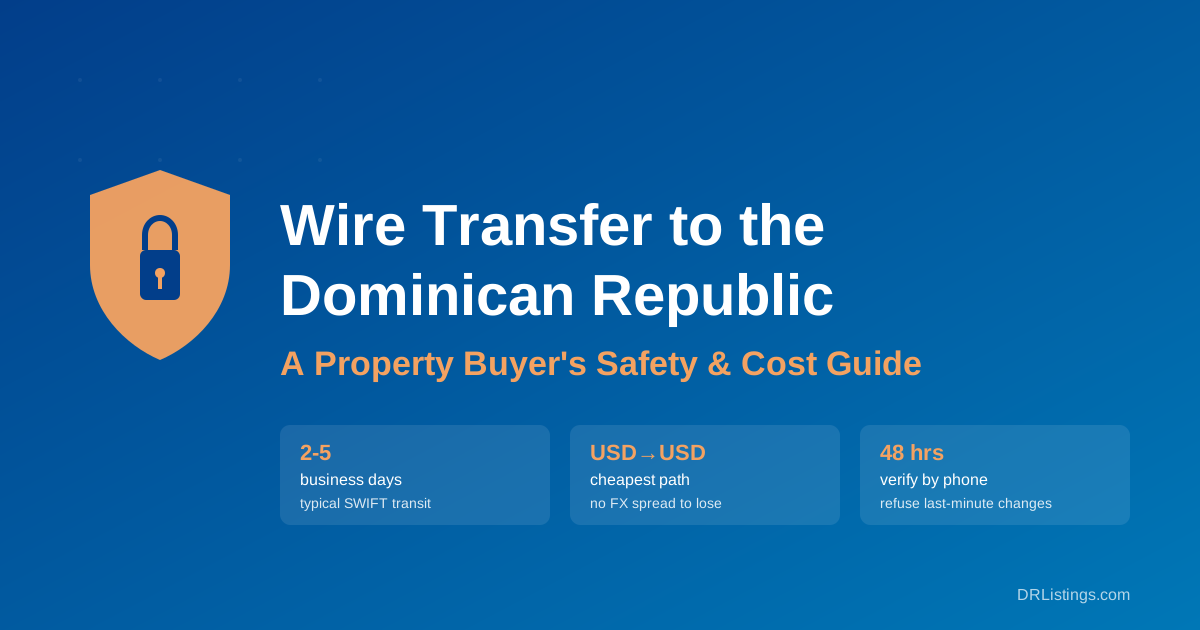
- Skipping wire-instruction verification. Wire fraud is the number-one escrow scam. Criminals intercept email threads, send fake updated wire instructions, and divert the deposit. Always verify wire instructions by phone using a number you got from the law firm's website, not from the email.
- Assuming the deposit stays refundable forever. Once the Promesa de Venta is signed, the clock has effectively stopped on your easy refund window. Read the contract before signing.
- Using the seller's recommended attorney as escrow agent. No matter how friendly they seem, this is a structural conflict. Hire your own.
- Skipping escrow on pre-construction. Pre-construction deposits that go straight to a developer are not protected the same way. Always insist that pre-construction money sit in escrow or a developer-trust structure with clear release milestones tied to construction progress. If you are weighing the pre-construction route, the pre-construction vs pre-built homes breakdown covers the trade-offs.
The DR has matured into one of the more foreign-friendly real estate markets in the Caribbean. See the broader DR investment climate for context. Maturity does not mean you can skip the basics. Whether you are looking at villas for sale in the Dominican Republic, condos for sale in the Dominican Republic, North Coast properties, or East Coast properties, the escrow playbook is the same: neutral third party, written contingencies, verified wire instructions.
Frequently Asked Questions
Is escrow required for real estate transactions in the Dominican Republic?
No. There is no national escrow licensing regime equivalent to US state regulators. However, virtually all serious foreign-buyer transactions use escrow because it is the only practical way to protect a cross-border deposit while title due diligence is completed.
Who holds escrow money in the Dominican Republic?
Funds are typically held by either a Dominican attorney's professional trust account or a dedicated escrow / title company such as Secure Title Latin America (formerly Stewart Title Latin America). Both options can work, but the holder must be independent of the seller and their representatives.
How much is the deposit when buying property in the Dominican Republic?
The standard deposit is 10% of the purchase price, paid into escrow when the reservation form or Promesa de Venta is signed. Some deals, particularly pre-construction or higher-value transactions, use deposits between 5% and 30% depending on what is negotiated.
Is the escrow deposit refundable in the Dominican Republic?
The deposit is typically fully refundable until the Promesa de Venta is signed. After that point, it becomes non-refundable except where a written contingency, such as a failed title search, missing deslinde, or seller default, is triggered.
How long does closing take in the Dominican Republic?
A typical foreign-buyer closing takes 30–60 days from the signing of the Promesa de Venta. Clean cash deals can close in as little as 5–10 days, while financed deals or transactions involving title issues can extend to 90 days or more.
What fees are paid out of escrow at closing?
Escrow disburses the seller's net proceeds, the 3% property transfer tax to DGII, recording fees at the Registro de Títulos (around $200–$500), attorney fees (~1% of price), notary fees, and any agreed-upon escrow company fee. Total closing costs typically run 4.5%–6% of the purchase price.
Can I use a US escrow company for a Dominican Republic property purchase?
You can use a US-based escrow account. Many DR law firms and title companies hold foreign-buyer deposits in US banks. However, you cannot use a generic US escrow company that does not have Dominican counsel attached, because the escrow agent must coordinate with the Registro de Títulos and DGII for the actual closing.
What happens to my deposit if the title search reveals problems?
If the title search uncovers a defect that the seller cannot or will not cure within the contract window, your Promesa de Venta should treat this as a contingency failure. The deposit returns to you in full, less any non-refundable third-party costs already paid (such as the title search fee itself).
Can foreigners open an escrow account in the Dominican Republic?
Foreigners do not personally need to open a Dominican escrow account. The account is opened and operated by the chosen escrow agent, your attorney or a title company, on behalf of the transaction. The buyer simply wires funds in from their home-country bank.
How do I avoid wire fraud when sending an escrow deposit overseas?
Verify wire instructions by phone using a number sourced independently from the law firm's website, not from the email containing the instructions. Be skeptical of any last-minute changes to wire details. Confirm the receiving bank, account name, and account number with the escrow agent in a recorded call before sending funds.
David Logan
site_adminContributing writer for DRListings.com, sharing insights about Dominican Republic real estate.
Comments
Log in to join the conversation