Yes, you can work remotely from the Dominican Republic, and a lot of Americans and Canadians already do. In the last three or four years, fiber rollouts, Starlink, and a critical mass of expat-friendly towns have turned the country from a vacation spot into a real remote-work base. The question for most people isn't "is the internet fast enough?" anymore. It's where to set up, how to handle the occasional power cut, and what your legal status looks like if you stay longer than a tourist trip.
This guide walks through the parts that actually matter when you're trying to keep your job from a beach town: realistic internet quality by location, where coworking and cafe culture exist, how the visa picture works (spoiler: there's no dedicated digital nomad visa), and which neighborhoods make sense if you're thinking about renting or buying.
Internet in the Dominican Republic for Remote Work
The country has four real options for getting online: Claro, Altice, Wind Telecom, and Starlink. The first three are traditional ISPs running fiber, cable, and fixed wireless. Starlink is satellite. It's now widely used as either a primary connection in less-developed areas or a backup line for serious remote workers in cities.
Typical fiber and cable plans in major towns run 50 to 300 Mbps for around $35 to $60 USD a month. Claro and Altice dominate the urban and tourist markets. They have the strongest fiber coverage in Santo Domingo, Santiago, Punta Cana, Cap Cana, Sosúa, Cabarete, and Las Terrenas. Wind Telecom fills in fixed-wireless gaps in the suburbs and smaller towns. Starlink residential service in the DR runs around RD $2,900 a month (about $48 USD) with median real-world speeds in the 70 Mbps range and very low jitter, which is what matters for video calls.
Mobile data is cheap and useful as a second backup. Claro and Altice both run nationwide 4G with 5G in major cities. Prepaid SIMs and eSIM plans are easy to set up at any kiosk, and a month of generous data usually runs $15 to $25 USD.
The thing nobody warns you about isn't speed. It's power. Apagones (blackouts) are still common, especially outside the gated developments. They might last ten minutes or two hours, and they're the single most likely thing to derail a workday. The fix is well-known to anyone who's lived here a while: rent or buy a building that has an inverter or a generator, plug your router and modem into a small UPS, and you'll barely notice when the grid drops. This isn't a red flag. It's standard infrastructure in any condo marketed to expats. When you're touring rentals, ask "¿Hay inversor?" before you ask about the view.
Best Cities and Towns for Remote Work
There's no single "right" place to set up. The DR is bigger and more varied than people expect, and the choice usually comes down to whether you want a city, a beach town, or a gated community feel.
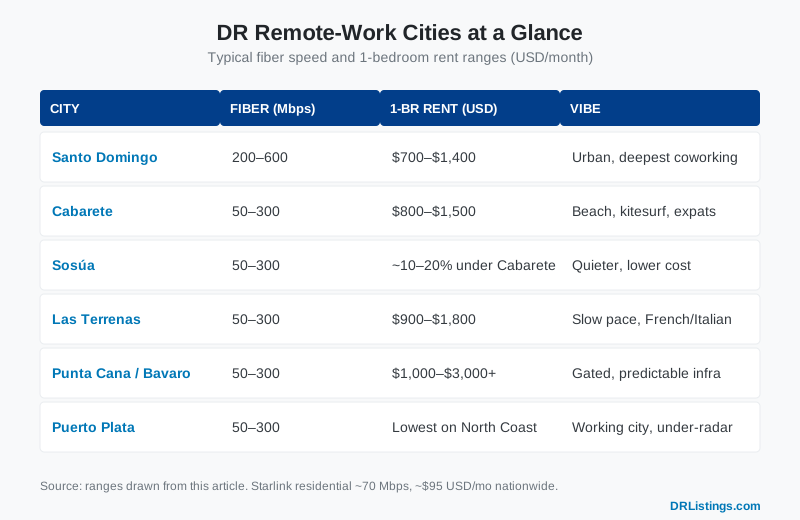
View text version of this infographic
DR Remote-Work Cities at a Glance — typical fiber speeds and 1-bedroom rents (USD/month):
- Santo Domingo — Fiber 200–600 Mbps — Rent $700–$1,400 — Urban, deepest coworking scene
- Cabarete — Fiber 50–300 Mbps — Rent $800–$1,500 — Beach, kitesurf, deep expat community
- Sosúa — Fiber 50–300 Mbps — Rent ~10–20% under Cabarete — Quieter, lower cost
- Las Terrenas — Fiber 50–300 Mbps — Rent $900–$1,800 — Slow pace, French/Italian expats
- Punta Cana / Bavaro — Fiber 50–300 Mbps — Rent $1,000–$3,000+ — Gated, predictable infrastructure
- Puerto Plata — Fiber 50–300 Mbps — Lowest on North Coast — Working city, under-the-radar
Starlink residential is available nationwide at ~70 Mbps for ~$48 USD/month.
Santo Domingo
The capital has the fastest urban fiber, the deepest coworking scene, and by far the most amenities: hospitals, restaurants, direct flights, the works. Neighborhoods like Piantini, Naco, and the historic Zona Colonial are where most remote workers land. Expect fiber speeds in the 200 to 600 Mbps range in any modern building, plus enough cafes that you can rotate through a different one every day for a month. Rent for a remote-work-friendly 1-bedroom usually runs $700 to $1,400 a month depending on neighborhood and amenities. If you want urban energy, this is the pick. Browse the Santo Domingo area for neighborhood listings.
Cabarete
Cabarete is the original North Coast remote-work town, built around kitesurfing, surfing, and a long-running international expat scene. Fiber from Claro and Altice covers most of the main strip, and Starlink is common on the edges. The vibe is casual: flip-flops to the cafe, ocean wind through the screens, dinner with people from six countries. Rent for a 1-bedroom condo near the beach runs $800 to $1,500 a month furnished. Inventory at the buyer end is healthy too. See condos for sale in Cabarete for what the market currently looks like, or browse the broader Cabarete area page.
Sosúa
Ten minutes east of Cabarete, Sosúa is quieter, cheaper, and has its own beach and small-town feel. Internet quality is essentially identical to Cabarete since they share the same ISP infrastructure. Rents tend to run 10 to 20 percent lower than Cabarete for comparable space, which is why a lot of long-term remote workers end up here. The coworking and cafe scene is smaller but growing. If you're price-sensitive but still want the North Coast lifestyle, look at Sosúa and condos for sale in Sosúa.
Las Terrenas
On the Samaná Peninsula, Las Terrenas has a strong French and Italian expat community, palm-lined beaches, and surprisingly good fiber in the town center. It's more remote (about a three-hour drive from Santo Domingo) but the new toll road has cut that down considerably. The coworking scene is small but real, and the cafes are some of the best in the country. Expect 1-bedroom rents in the $900 to $1,800 range depending on proximity to the beach. This town rewards people who actually want a slower pace.
Punta Cana, Bavaro, and Cap Cana
The East Coast is gated-community territory. If you want predictable infrastructure, fiber that just works, backup power as standard, and a short walk to a pool, this is the easiest landing pad in the country. The trade-off is that it can feel a bit like a resort bubble. Local culture is more accessible from the North Coast or the capital. Rents in the gated developments run a wide range, from around $1,000 a month for a basic 1-bedroom in Bavaro to $3,000-plus for upscale Cap Cana. Start with Punta Cana and condos for sale in Punta Cana to get a feel for inventory, or look at the broader East Coast region.
Puerto Plata
The under-the-radar option. Puerto Plata is a working city, not built for tourists in the way Punta Cana is, and that's reflected in the price. Rent is lower across the board, fiber is solid in town, and you're 20 minutes from Sosúa and 30 from Cabarete. If you want the lowest cost of living on the North Coast without being completely isolated, check out Puerto Plata.
Coworking Spaces and Remote-Work-Friendly Cafes
Coworking matters more in the DR than it does back home, for one practical reason: redundant internet plus backup power, in the same room. When the apagón hits the block at 2 p.m., a real coworking space stays online. That alone is worth the day pass.
In Santo Domingo, the coworking density is the highest in the country. The Box Working Space in Piantini is the best-known, with day passes around $15 to $20 USD and monthly memberships in the $150 to $250 range. Cafe Conde and El Buho Cafe in the Zona Colonial are reliable cafe-style options, and the lobby of the Gran Hotel Europa has been a quiet remote-work staple for years.
In Cabarete, the coworking scene clusters near the main beach road. Most spots offer day passes around $10 to $15 and a monthly rate in the $100 to $180 range. Las Terrenas has CoWorking Las Terrenas, which advertises 50+ Mbps with battery and generator backup. In Punta Cana, options are more spread out across the gated developments, and many remote workers default to hotel business centers or beachfront cafes with a strong signal.
A note on cafe etiquette: in the DR, "good wifi" usually means it works for streaming and calls, not necessarily that you can camp for eight hours. Buy something every couple of hours, tip a little more than feels normal back home, and you'll be welcome anywhere. If you're new to local norms, the tipping etiquette in the DR post covers the basics.
Visa, Tax, and Legal Status for Remote Workers
This is where a lot of guides fudge things, so let's be direct.
The Dominican Republic does not have a dedicated digital nomad visa. As of 2026, there is no remote-work or digital-nomad-specific permit you can apply for. Anyone who tells you otherwise is either confusing the DR with Costa Rica, Mexico, or another country in the region, or they're outdated. What the DR does have is a generous tourist policy and several real residency pathways.
Most short-term remote workers enter on the standard tourist card, which is included with your airfare and gives you 30 days on arrival. Stays past 30 days are common. The country's approach has historically been to let you overstay and pay a graduated fee on departure rather than kick you out. Many remote workers run a 60- to 180-day stay this way and budget for the overstay fee at the airport. Fees scale with the length of stay; check the current schedule with Dirección General de Migración before you fly out.
For longer commitments, the main residency pathways are:
- Rentista: for people with around $2,000 a month in passive income (rent, royalties, dividends).
- Pensionado: for retirees with a verifiable pension of around $1,500 a month.
- Investor: for buyers of real estate at $200,000 or above, which fast-tracks residency.
Tax-wise, the DR generally taxes residents on local-source income and is much lighter on foreign-source income, with a 183-day threshold often used to gauge tax residency. This is the part of the article where you should actually hire a Dominican CPA. The rules have nuance and they change. Don't take blog-post guidance, including this one, as tax advice.
Buying or Renting as a Remote Worker
A lot of people show up planning to stay a month, extend to six, and then start asking about buying. The math gets interesting fast: property tax in the DR is low (around 1 percent above a generous exemption threshold), and qualifying new builds can come with a 15-year exemption from property tax and transfer tax through the CONFOTUR tax benefits program. If you're going to be here long enough to own a place, those numbers matter.
When you're evaluating a remote-work-ready property (whether to rent or buy) there are four things to check that locals take for granted but newcomers often miss:
- Inverter or generator. Non-negotiable. Confirm what powers what during an outage. A small inverter that runs lights, fans, and the router is cheap to install if the building doesn't have one. Whole-building generators are best.
- Fiber availability. Not every street has Claro or Altice fiber yet, even in places where it's "supposed to." Ask the building admin or current tenants what they actually use, and run a Speedtest before signing anything.
- Backup water tank (cisterna). Water is also less reliable than back home. Any condo built in the last 15 years will have one. Confirm it.
- AC efficiency. Inverter-style mini-splits in the bedrooms keep electricity bills sane. Old ACs in DR coastal humidity will eat your monthly budget.
If you're moving toward buying, the how to buy property in the Dominican Republic walkthrough covers the legal process step by step, and Dominican Republic mortgages for foreigners covers financing options. New developments (many of which are CONFOTUR-eligible and built with backup power as standard) are worth a look at new developments. General condos for sale across the country gives a wider view if you haven't picked a city yet.
Tips from Expats
A few things long-term remote workers in the DR consistently say they wish they'd known on day one:
- Bring two phones or two SIMs. Claro and Altice each have dead zones in the other's strongholds. Having both means you always have data.
- Power your router from a UPS, not from a wall outlet. A $40 UPS keeps you online through 95 percent of apagones.
- Use Starlink as backup, not primary, in cities. Fiber is faster and cheaper when it's working. Save Starlink for outages or remote areas.
- Visit before you sign a 12-month lease. Cabarete in February is not Cabarete in October. Try a place for two to four weeks before committing.
- Learn the basic Spanish for utility issues. Internet outage, water out, breaker tripped: knowing how to talk to the building admin saves entire workdays.
- Account for the heat in your work schedule. A lot of remote workers shift to early mornings and late afternoons, with a beach or pool break in the worst of the midday sun. Productivity goes up, not down.
Frequently Asked Questions
Does the Dominican Republic have good internet for remote work?
For most remote-work needs, yes. Fiber from Claro and Altice delivers 50 to 300 Mbps in major cities and tourist towns at $35 to $60 USD a month, and Starlink covers anywhere fiber doesn't reach. Video calls, large file transfers, and screen sharing work without issue in any major town. The main caveat is power reliability. Choose a building with an inverter or generator.
Is there a digital nomad visa for the Dominican Republic?
No. The DR does not have a dedicated digital nomad visa. Most remote workers enter on the standard tourist card (30 days on arrival) and either stay short-term and leave, overstay and pay a fee on exit, or pursue residency through the Rentista, Pensionado, or Investor pathways for longer commitments.
How fast is Starlink in the Dominican Republic?
Starlink residential service in the DR typically delivers around 70 Mbps with low latency and very low jitter, fine for video calls and streaming. It runs roughly RD $2,900 a month, about $48 USD. Many serious remote workers use it as a backup to fiber rather than a primary connection in cities.
What are the best cities in the DR for digital nomads?
Santo Domingo for urban energy and the most coworking. Cabarete and Sosúa for beach lifestyle and a deep expat scene on the North Coast. Las Terrenas for a quieter European-flavored expat town. Punta Cana for predictable gated-community infrastructure. Puerto Plata for the lowest cost on the North Coast.
Can I work remotely from the DR on a tourist visa?
Practically, yes, and many people do. The tourist card covers entry for 30 days and overstays are handled with a fee on departure rather than enforcement. There is no employment authorization involved because you're not working for a Dominican employer. Confirm overstay fee schedules with Dirección General de Migración before flying out.
Do I have to pay taxes if I work remotely from the Dominican Republic?
It depends on residency status and how long you stay. The DR generally taxes residents on Dominican-source income and applies softer treatment to foreign-source income, with the 183-day rule often used to determine residency. Tax obligations to your home country (the U.S. taxes citizens regardless of where they live, for example) are separate. Hire a Dominican CPA. Don't rely on guides like this one.
Is the wifi reliable in Punta Cana?
In the major gated developments (Cap Cana, Bavaro, Punta Cana Village) yes. Fiber is widespread, backup power is standard in most condo buildings, and many resorts and coworking spots are tuned to remote-work needs. Outside the gates, quality varies more. Confirm the specific building's setup before booking long-term.
David Logan
site_adminContributing writer for DRListings.com, sharing insights about Dominican Republic real estate.
Comments
Log in to join the conversation