Most property content about the Dominican Republic sells the same picture: white sand, palm trees, and mid-80s heat year-round. Jarabacoa, Dominican Republic is the counter-pitch. The town sits in the central highlands at about 525 meters (1,722 feet) of elevation. This small mountain town in La Vega Province trades beachfront for pine forests, river valleys, and mornings cool enough to wear a fleece. Average annual temperatures hover around 68°F, and winter nights can drop into the 40s during cold-front events.
That climate is why wealthy Dominicans from Santo Domingo and Santiago have built second homes here for generations. It's also why a quieter wave of foreign retirees and remote workers has started arriving — usually after dismissing the coast for being too hot. This guide is for those buyers. It covers what the area is actually like, who lives here, what property looks like, and where the friction shows up.
Where Jarabacoa Is and Why the Climate Is Different
Jarabacoa sits in La Vega Province, in the foothills of the Cordillera Central. That mountain range runs down the spine of Hispaniola and includes Pico Duarte, the Caribbean's highest peak at 3,101 meters (10,174 feet). The town itself is at roughly 525 meters above sea level. That doesn't sound like much until you remember that nearly every other DR market a foreign buyer considers — Punta Cana, Sosúa, Las Terrenas, Cabarete — is at or near sea level on a tropical coastline.
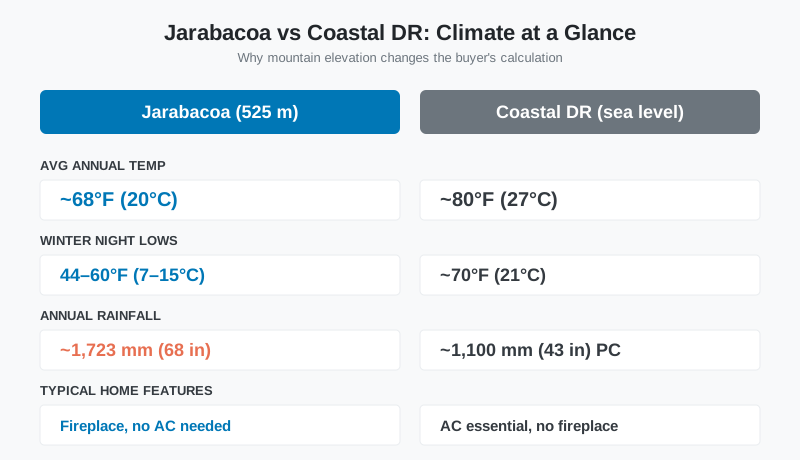
That elevation buys you a different climate. Daytime temperatures typically run 25–30°C (77–86°F), which is comfortable rather than oppressive. Nighttime is where the contrast really shows up. Lows commonly drop to 13–15°C (55–60°F). During cold fronts in December and January they can dip to around 7°C (44°F). Houses here are designed accordingly. You'll see fireplaces, sweaters, and the occasional space heater — none of which exist in coastal DR.
View text version of this infographic
Jarabacoa vs Coastal DR: Climate at a Glance
| Metric | Jarabacoa (525 m) | Coastal DR (sea level) | |---|---|---| | Average annual temperature | ~68°F (20°C) | ~80°F (27°C) | | Winter night lows | 44–60°F (7–15°C) | ~70°F (21°C) | | Annual rainfall | ~1,723 mm (68 in) | ~1,100 mm (43 in) — Punta Cana reference | | Typical home features | Fireplace, no AC needed | AC essential, no fireplace |
The trade-off is rain. Jarabacoa receives roughly 1,723 mm (about 68 inches) of rainfall per year, which is meaningfully more than Punta Cana's coast. Afternoon showers are common, the surrounding hills stay green, and "rainy season" feels real. Buyers used to dry Caribbean coastlines often underestimate this.
Drive times put Jarabacoa within reach of the country's main hubs. Santiago is about 45 minutes away by car. La Vega, the provincial capital, is around 25 minutes. Santo Domingo runs roughly two hours via the autopista Duarte. The closest airport is Cibao International (STI) in Santiago, about an hour from town. STI is served by direct flights from Miami, New York, and several other US cities. That access matters: you can land at STI in the morning and be unpacking at a mountain villa by lunch.
Who Buys in Jarabacoa
The buyer mix here is unusual for the Dominican Republic. Understanding it changes how you think about pricing, resale, and rental potential.
The dominant buyer is Dominican. Wealthy families from Santo Domingo and Santiago have used Jarabacoa as a summer-and-weekend escape for decades. The local nickname is "La Ciudad de la Eterna Primavera" (the City of Everlasting Spring). Many of the larger gated communities and mountain villas were built for this domestic market. Pricing is often discussed in pesos, and demand tracks the Dominican economy more than the US tourist cycle.
The second group is foreign retirees, often Americans and Canadians. They looked at Sosúa, Cabarete, or Punta Cana and decided the heat, humidity, or party-town energy wasn't for them. Jarabacoa appeals to people who want the cost-of-living advantage of the DR without the year-round summer.
The third is the adventure-sport crowd — paragliders, white-water kayakers, mountain bikers, hikers. Jarabacoa is the staging ground for trips to Pico Duarte and the put-in for rafting on the Yaque del Norte.
What this buyer mix means practically: Jarabacoa is not a USD short-term-rental market the way Punta Cana is. There's no Airbnb gold rush, no all-inclusive resort spillover. If you buy here as an investment, the realistic income story is longer-term rentals to Dominican professionals, monthly rentals to remote workers, or seasonal rentals to families escaping the coast in July and August. Plan accordingly.
Neighborhoods and Property Types
Jarabacoa is small enough that "neighborhood" often means a road, a ridge, or a named development. The main areas buyers consider:
Town center (Jarabacoa proper). Walkable, with grocery stores, banks, restaurants, and the town park. Houses here are smaller and older, often on tight lots, and prices are the lowest in the area. It's a good fit if you want services within walking distance and don't need acreage or a view. Internet and utilities are most reliable here.
Palo Blanco and Pinar Dorado. These are the established residential zones a few minutes outside town. Palo Blanco in particular has a long-standing concentration of expat-friendly homes — mountain villas, well-built houses on larger lots, mature landscaping. Pinar Dorado is similar in character. This is where most foreign retirees end up looking first.
Buena Vista and the road toward Manabao. Heading west and southwest of town, the terrain gets steeper, the lots get bigger, and you start to see river-frontage and small finca (farm) parcels. Less infrastructure, more privacy, more weather. Buyers who want acreage, fruit trees, or a defensible homestead look here.
Jarabacoa Mountain View and other gated communities. These are higher-end developments with security, paved internal roads, and amenities like a clubhouse or pool. They tend to attract Dominican second-home owners and foreign buyers who prioritize hassle-free maintenance over rural character.
Property types break down across a few buckets. Villas — typically 2 to 4 bedrooms, often with a fireplace and outdoor living space — dominate the established residential zones. Current inventory is browsable on the villas for sale in Jarabacoa page. Mountain cabañas (cabins) are common and range from rustic weekend retreats to fully finished modern units. Buildable land is unusually plentiful here compared to coastal markets, and many buyers come specifically for a lot to build on. See land for sale in Jarabacoa for what's currently listed. Small fincas with fruit trees, coffee, or river access exist but require careful title diligence (more on that below).
Price ranges shift constantly, but as a rough orientation: buildable lots commonly run from the high five figures into the low six figures USD depending on size and location. Finished houses in established neighborhoods typically sit in the low-to-mid six figures. Luxury villas in gated communities can run well into seven figures. Current asking prices on the Jarabacoa real estate listings page are the most reliable reference.
Cost of Living in Jarabacoa
Jarabacoa is cheaper than coastal expat hubs like Las Terrenas or Cap Cana, but not as cheap as some digital-nomad sites suggest. Published cost-of-living estimates put a single person at roughly $1,964 per month and a family at around $2,467 per month, with rent for a typical apartment near $539 per month. Treat those as a baseline aimed at frugal remote workers, not a ceiling for a retired couple who wants to eat well, run a car, and heat the house in January.
Where the math actually works in your favor: produce, meat, and prepared food in local markets and Dominican restaurants are priced in pesos for a domestic clientele. They're noticeably cheaper than the same items in Punta Cana. Domestic help is affordable. Property taxes are low — the DR's annual IPI tax exempts properties below a generous threshold and applies a 1% rate above it.
Where it doesn't: imported goods (US-brand groceries, electronics, cars) cost the same or more than they would on the coast because of the extra logistics getting up the mountain. Electricity is the biggest wildcard. Grid power is generally reliable in town and the established neighborhoods, but outages happen. Most homes have an inverter battery system or a generator. Budget for both the equipment and the diesel.
Lifestyle: What There Actually Is to Do
The lifestyle pitch for Jarabacoa is outdoor and slow-paced. The headline activities:
- Pico Duarte trekking. Multi-day guided hikes to the Caribbean's highest summit start from nearby Manabao and La Ciénaga.
- Waterfalls. Salto Jimenoa Uno (featured in the opening of Jurassic Park) and Salto Baiguate are both within a short drive of town.
- White-water rafting. The Yaque del Norte, the country's longest river, runs commercial Class II–III trips out of Jarabacoa year-round.
- Paragliding. Loma La Joya is one of the Caribbean's better-known launch sites.
- Horseback riding, mountain biking, and trail running through the surrounding pine forests.
Day-to-day life is quieter than the coast. There's a small but real expat community, weekly farmers' markets, a handful of decent restaurants and coffee shops (Jarabacoa sits in coffee country), and a few bilingual social clubs. The annual Flower and Coffee Festival in June draws domestic tourists.
What Jarabacoa doesn't have, and you should accept before buying: a beach, a nightlife scene, a mall, or a large international supermarket. For those, you drive 45 minutes to Santiago.
Practical Living: Healthcare, Schools, Internet, Safety
Healthcare. Jarabacoa has local clinics for primary care, prescription refills, and minor emergencies. For anything serious — surgery, cardiology, oncology, complex obstetrics — the standard referral pattern is to private hospitals in Santiago. The main options are HOMS (Hospital Metropolitano de Santiago) and Hospiten. The drive is about 45 minutes in normal traffic. Many expats keep international or Dominican private health insurance and use Santiago as their hospital base.
Schools. Bilingual and international school options inside Jarabacoa are limited. Expat families with school-age children typically commute to Santiago, choose homeschool, or pick a different DR market for the school years (La Vega and Santiago both have more options). This is a real constraint for anyone moving with kids.
Internet. Fiber service from Claro and Altice covers town and most of the established residential neighborhoods. Speeds are generally adequate for video calls and remote work. Coverage gets spottier as you move out toward fincas and remote ridges. Verify the specific address before committing if working remotely is the plan.
Safety. Jarabacoa is a small town with low violent crime relative to the country and the region. Standard rural-DR precautions apply: lock the gate, don't flash valuables, get to know your neighbors. For a wider read on the country, see our overview of how safe the DR is overall.
Language. Less English is spoken here than in Sosúa, Cabarete, or Las Terrenas — Jarabacoa never developed as an English-speaking expat hub. Functional Spanish makes daily life much easier. Plan to learn it.
Buying Property in Jarabacoa: What's Different
The legal mechanics of buying here are the same as anywhere else in the country. Foreigners can buy freehold property with no nationality restrictions. The closing process runs through a notary and the title registry. Our full walkthrough on how foreigners buy property in the DR covers the steps end to end. A few things specifically matter more in Jarabacoa than on the coast:
Title diligence on rural land. Mountain and rural parcels in the DR are more likely to be undeslindado (un-surveyed and not yet titled under the modern unified system) than coastal subdivision lots. Buying these is possible but slower and riskier — your attorney needs to do extra work. Insist on a properly titled, surveyed parcel unless you and your lawyer have a specific plan for the alternative.
Water rights. Riverfront parcels along the Yaque del Norte and its tributaries are appealing, but water-extraction rights and shoreline access can be murky. Confirm in writing what you can and can't do with the water before you sign.
CONFOTUR rarely applies. The DR's tourism-development tax incentive primarily covers coastal tourism zones. Very few Jarabacoa developments hold a CONFOTUR designation. If you're shopping specifically for the CONFOTUR tax benefits, Jarabacoa is probably the wrong market.
Mortgages are thinner. Domestic banks lend on mountain properties, but the foreign-buyer mortgage products that have grown up around coastal markets are less available here. Most foreign purchases are cash. Our overview of financing options for foreign buyers covers what's realistic.
Building vs. buying built. Because raw land is plentiful and reasonably priced, more buyers in Jarabacoa than in coastal markets seriously consider building. The decision involves trade-offs we've covered in the pre-construction vs pre-built post — start there before falling in love with a lot.
Frequently Asked Questions
Is Jarabacoa, Dominican Republic safe? Yes. Jarabacoa is generally one of the safer towns in the country, with low violent crime relative to the wider Caribbean. Standard small-town precautions apply: lock up at night, don't display valuables, and get to know neighbors. Most expats describe daily life as low-stress on the safety front.
How cold does Jarabacoa get? Average annual temperature is around 20°C (68°F). Daytime highs typically run 25–30°C (77–86°F) year-round, while nighttime lows commonly drop to 13–15°C (55–60°F). During winter cold fronts in December and January, temperatures can dip to around 7°C (44°F). Many homes have fireplaces, and sweaters are part of normal life.
How far is Jarabacoa from Santiago, Santo Domingo, and Punta Cana? Jarabacoa is about 45 minutes by car from Santiago, roughly two hours from Santo Domingo via the Autopista Duarte, and around four to five hours from Punta Cana. The closest international airport is Cibao International (STI) in Santiago, about an hour away.
Is Jarabacoa a good place to retire? Yes for retirees who prioritize cooler weather, outdoor activity, and a quieter pace. It's a poor fit for anyone who wants a beach, an active English-speaking social scene, or extensive shopping and nightlife. Healthcare for anything serious requires a 45-minute drive to Santiago, which most retirees handle by keeping a Santiago hospital as their base.
Can foreigners buy property in Jarabacoa? Yes. Foreigners can buy property freehold anywhere in the Dominican Republic with no nationality restrictions, and Jarabacoa is no exception. The closing process runs through a notary and the title registry. Title diligence is more involved on rural and mountain parcels than on coastal subdivision lots, so legal representation matters.
What is the cost of living in Jarabacoa? A frugal single person can live on around $1,964 per month and a family on around $2,467, with apartment rent often near $539 per month. Realistic budgets for retired couples who run a car, heat the house, and don't pinch every peso typically run higher. Imported goods cost about the same as the coast; local food, services, and labor are cheaper.
Does Jarabacoa have good internet? Yes in town. Fiber service from Claro and Altice covers Jarabacoa and most established neighborhoods, with speeds suitable for video calls and remote work. Coverage thins out on remote fincas and mountain ridges, so verify the specific property's service availability before buying if remote work is the plan.
What is there to do in Jarabacoa? The lifestyle is outdoor and slow. Common activities include hiking to Pico Duarte, visiting Salto Jimenoa and Salto Baiguate waterfalls, white-water rafting on the Yaque del Norte, paragliding from Loma La Joya, horseback riding, and mountain biking. Town life centers on cafés, weekly markets, and a small expat community. There is no beach or nightlife scene.
Is Jarabacoa a good investment for vacation rentals? No, not in the Punta Cana sense. Jarabacoa is not a USD short-term-rental market. The realistic rental story is long-term rentals to Dominican professionals, monthly rentals to remote workers, or seasonal rentals to Dominican families escaping the coast in summer. Investors expecting Airbnb yields modeled on resort markets will be disappointed.
Is Jarabacoa Right for You?
Jarabacoa is a strong fit for buyers who want a cooler climate, real outdoor activity, lower coastal-market hype, and a foothold in a domestic Dominican market rather than a tourist-driven one. It's a poor fit for buyers who want a beach, an English-speaking expat scene, hands-off vacation-rental income, or a fully built-out international school for kids.
If you've read this far and the climate-and-mountains pitch still resonates, the most useful next step is to look at what's actually for sale on the Jarabacoa real estate listings page, then narrow into villas or land depending on whether you'd buy finished or build your own.
David Logan
site_adminContributing writer for DRListings.com, sharing insights about Dominican Republic real estate.
Comments
Log in to join the conversation