Las Terrenas Dominican Republic is a beach town on the Samaná Peninsula, on the country's northeast coast. It sits about 2.5 hours by car from Santo Domingo. The town draws North American buyers who want a smaller, walkable, European-flavored place instead of a US-style resort enclave. If you picture a Caribbean Punta Cana when you think DR, Las Terrenas is the opposite: a fishing village that grew into a cosmopolitan beach town without losing its scale. This guide covers where it is, the neighborhoods, real prices, cost of living, the buying process for foreigners, and the honest tradeoffs.
Where Las Terrenas Is and How You Get There
Las Terrenas sits on the north shore of the Samaná Peninsula. The peninsula is the long finger of land that points east off the DR's northeast coast. It faces the Atlantic, with miles of palm-fringed beaches and green hills behind the town.
For most North American buyers, three airports matter:
- El Catey International (AZS). About 30-45 minutes by car. The closest airport, with limited direct flights from Canada (mostly seasonal charters from Montreal and Toronto) and a handful of scheduled US connections.
- Santo Domingo Las Américas (SDQ). About a 2.5-hour drive on the Boulevard Turístico del Atlántico. The most flight options from US and Canadian hubs.
- Puerto Plata (POP). About a 2.5-hour drive west. A reasonable alternative with strong connections to Canada.
The Samaná highway opened in 2008 and is the single biggest reason Las Terrenas became a viable second-home market. Before it, the drive from Santo Domingo took five to six hours on rural roads. Today it's a modern toll road. Budget around $10-$15 USD in tolls each way. Once you exit the highway and start climbing into the peninsula, the road narrows and gets more local. Scooters, motoconchos, and the occasional cow are part of the experience. For more on how road and airport upgrades have changed the buyer map, see our overview of DR infrastructure projects.
The Vibe and Who It's For
Las Terrenas has a different feel from anywhere else in the DR. French, Italian, Swiss, German, and Quebecois expats started arriving in the 1980s and 1990s, and the social and commercial fabric still reflects that. You'll hear Spanish, French, Italian, and English on the same block on Calle Duarte, the main strip. Bakeries sell real baguettes. The pizza is Italian-Italian, not Caribbean-Italian. Restaurants tend to be small, owner-operated, and open late.
The pace is slower than Punta Cana and more residential than Cabarete. There's no all-inclusive resort district. There are no US chain restaurants. Most buyers walk, scooter, or drive an ATV around town. The beach is the social hub. Playa Las Ballenas in the morning, beach bars at sunset, dinner in town.
This setup suits buyers who want walkability, a real food scene, and a European social fabric. It does not suit buyers who want gated golf-resort living, an English-only environment, or Costco-on-the-corner conveniences. If you're choosing between Las Terrenas and a master-planned community further east, the answer usually comes down to whether you'd rather live in a town or in an amenity package.
Las Terrenas Neighborhoods and Beach Areas
Las Terrenas is small, but each pocket has a distinct character.
Pueblo de Las Terrenas (town center / Calle Duarte). The walkable core. Most restaurants, the supermarket, banks, and the daily-life infrastructure are here, plus a mix of older condos and newer mid-rise buildings a block or two off the beach. Best for buyers who want to ditch the car most days.
Playa Las Ballenas. The long curve of beach running west of town center. Quieter than Calle Duarte but still walkable to it. A mix of small condo developments, older villas, and a few newer projects. Popular with full-time residents and long-stay snowbirds.
Punta Popy. East of town, this stretch is known for kiteboarding and a younger, more active scene. New mid-rise condos have gone up here over the last several years and continue to.
Playa Bonita. A few minutes west over a small headland. A quieter, more design-forward area with surf-friendly waves and a smaller cluster of villas and boutique condos. You'll need a car to get to town.
Playa Cosón. Further west again. Long, undeveloped-feeling beach, larger lots, more secluded villas, and a more remote feel. Strong appeal for buyers who want privacy and aren't bothered by the 15-minute drive into town.
The Hills (Loma de Cosón area). Inland from Cosón, with elevated villa lots that get ocean views and cooler breezes. A favorite for buyers who want a real house with a pool and don't need to be on the sand.
El Portillo. East side, anchored by an older established community and a small airport that's mostly inactive for commercial flights. A nine-hole golf course and some larger single-family lots.
El Limón and Las Galeras. Adjacent options on the same peninsula for buyers willing to look further afield. Smaller, quieter, and more rural than Las Terrenas. Worth visiting if you want to compare.
If you're starting your search, the Las Terrenas real estate page is the easiest way to see what's currently listed across these areas, or you can browse the wider Samaná real estate market for adjacent peninsula options.
Property Types and Realistic Pricing in Las Terrenas Dominican Republic
Pricing in Las Terrenas spans a wide range. A lot depends on whether you want walkable-to-town, beachfront, or a private villa with land.
For condos, ranges typically seen in current listings:
- 1-bedroom, walking distance to town: roughly $150,000-$220,000 USD
- 2-bedroom, mid-market: roughly $200,000-$350,000 USD
- 2-3 bedroom beachfront or premium new build: roughly $400,000-$700,000+ USD
For villas:
- Inland or older 2-3 bedroom villas: roughly $250,000-$450,000 USD
- Newer or ocean-proximate villas with pools: roughly $450,000 to over $1,000,000 USD
- True beachfront villas: $1,500,000 USD and up, often well into the multi-millions
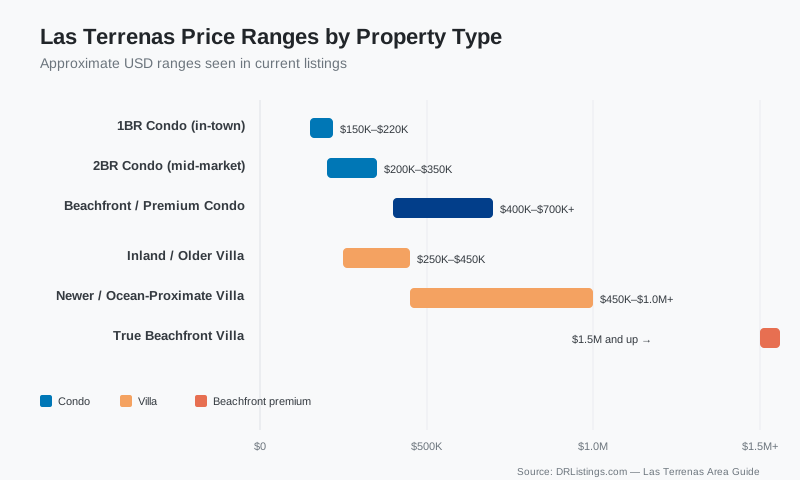
View text version of this infographic
Las Terrenas Price Ranges by Property Type (USD, current listings)
- 1BR Condo (in-town, walking distance): $150,000 – $220,000
- 2BR Condo (mid-market): $200,000 – $350,000
- Beachfront / Premium New-Build Condo: $400,000 – $700,000+
- Inland or Older 2-3BR Villa: $250,000 – $450,000
- Newer / Ocean-Proximate Villa with Pool: $450,000 – $1,000,000+
- True Beachfront Villa: $1,500,000 and up (often into the multi-millions)
Land is available, but title diligence matters more than for built product. Surveyed, titled lots in established subdivisions are straightforward. Rural parcels can have boundary or chain-of-title issues that take real legal work to resolve. Always insist on a title insurance policy and full title verification before transferring funds.
A note on pre-construction: Las Terrenas has a lot of new condo projects in the pipeline at any given time. The upside is lower entry pricing and structured payment plans (often 30% during construction, 70% on delivery). The downside is delivery delays and uneven build quality across developers. We've written a fuller breakdown of the pre-construction vs pre-built homes decision. Read it before you commit deposits to a project that hasn't broken ground.
If you want to focus your browsing, you can filter directly to villas for sale in Las Terrenas, condos for sale in Las Terrenas, or land for sale in Las Terrenas.
Cost of Living in Las Terrenas
A couple living comfortably in Las Terrenas commonly budgets between $2,000 and $3,000 USD per month. Couples who own their place outright and watch electricity use can land closer to $1,800. Couples who rent a nicer place, eat out often, and run AC constantly will be at $3,500 or more.
Approximate, seasonal numbers:
- Long-term rental, 1-2 bedroom condo: $700-$1,500 USD/month, with serious variance by season and proximity to the beach
- Groceries: local produce, chicken, and rum are cheap; imported European cheeses, wines, and pantry items cost more than they would in the US
- Electricity: the swing variable. A modest unit with restrained AC use runs $80-$150/month. A villa with central AC and a pool can run $300-$500+
- Eating out: local Dominican plates $6-$10, casual European restaurants $15-$30 per person, higher-end dinners $40-$70
- Internet: $40-$80/month for fiber where available; quality is good in town and patchier in outlying areas
- Health insurance: a couple in their 50s-60s often pays $150-$400/month combined for local private coverage; international coverage is more
A wider DR-level view of expenses helps put Las Terrenas Dominican Republic in context against Cabarete, Punta Cana, and Santo Domingo.
The Buying Process for Foreigners
Foreigners have full ownership rights in the Dominican Republic. No special permit, no local-partner requirement, no restrictions on the type of property. The process is straightforward but has its own paperwork.
The standard sequence is: signed offer, then Promise of Sale (binding contract with deposit, usually 10%), then due diligence period (title verification, survey, tax status, condo HOA review), then Deed of Sale signing in front of a notary, then registration at the Registro Inmobiliario. Closing typically takes 30-60 days. Closing costs run roughly 4-5% of the purchase price, mostly the 3% transfer tax plus legal fees and notary.
Funds should move through a structured escrow account, not directly between parties. If you haven't done a DR closing before, work with a bilingual real estate attorney from day one.
For full step-by-step detail, see how to buy property in the DR. Financing is harder than buying in cash, but possible. Our DR mortgage options for foreigners post covers what local banks will and won't do.
Taxes, CONFOTUR, and the Investment Angle
Las Terrenas is one of the most CONFOTUR-active markets in the DR. CONFOTUR is the tourism-investment tax incentive program. When a project is approved, qualifying buyers get up to 15 years of exemption from the 3% transfer tax, the annual IPI property tax, and tax on rental income from the unit. Not every Las Terrenas project is approved, and the exemption attaches to the specific project. Confirm in writing before you assume it applies. Our deep dive on CONFOTUR tax benefits walks through the eligibility and paperwork.
Outside of CONFOTUR, the annual IPI property tax is 1% on the assessed value above a threshold that's adjusted yearly. Always check the current figure with a Dominican accountant rather than relying on any specific number you read in older blog posts.
On rental yields: agency marketing routinely cites 10-15% gross returns. Be skeptical. Well-located, well-managed Las Terrenas condos typically deliver gross yields in the 6-8% range, sometimes lower after honest occupancy assumptions and HOA fees. The properties that hit the upper end are usually new beachfront condos with strong rental management and CONFOTUR benefits. Even then those numbers depend on a healthy tourism year.
The DR's residency-by-investment program currently uses a $200,000 USD property purchase as a qualifying threshold. That puts a wide range of Las Terrenas condos in the qualifying zone for buyers who want a residency path.
The Honest Tradeoffs of Living in Las Terrenas
No area is right for everyone. Things to weigh before buying in Las Terrenas:
- Hurricane exposure. The peninsula is on the Atlantic and the official hurricane season runs June through November. Direct hits are uncommon but possible. Modern construction handles wind well, but you'll want proper insurance and a plan for power and water in a multi-day outage.
- Power and internet outages. Both have improved a lot in the last decade. Both still happen. Most full-time residents have an inverter or generator and a backup mobile data plan.
- Healthcare. Local clinics handle routine care. For anything serious, the larger hospitals are in Samaná city or Santo Domingo. Plenty of expats fly to the US for major procedures.
- Off-season quiet. August through October is genuinely sleepy. Some restaurants close for a month. If you want consistent restaurant variety year-round, this might frustrate you. If you want quiet, it's the point.
- Language. Spanish and French dominate daily life. English works in tourist-facing spots and most real estate offices, less so at the hardware store, the auto mechanic, or the local clinic. You don't need fluent Spanish to live here, but a hundred phrases will make your life much easier.
- Driving in town. Calle Duarte gets chaotic, scooters and ATVs are everywhere, and there are no real sidewalks in stretches. Most owners drive a small SUV or, if they live in town, just walk and scooter.
For a broader DR safety picture, see is the Dominican Republic safe. Las Terrenas tracks the DR average. Sensible precautions, not a high-risk environment.
How Las Terrenas Dominican Republic Compares to Other DR Buyer Markets
A quick decision frame, since most buyers are choosing between two or three areas:
- vs. Punta Cana: Las Terrenas is smaller, more European, more walkable, and less amenity-driven. Punta Cana is bigger, more English-speaking, more golf-and-resort, and has more US-style infrastructure (Costco, chain restaurants, direct flights). If you want a town, pick Las Terrenas. If you want a master-planned community, pick Punta Cana.
- vs. Cabarete and Sosúa: Closest in scale and feel. Cabarete is more North American and wind-sport oriented (kitesurfing capital). Las Terrenas is more French and Italian, with a stronger food scene and a quieter beach culture. Sosúa is older, more developed, and has a different demographic mix.
- vs. Santo Domingo: Different category entirely. Santo Domingo is an urban capital with culture, healthcare, and year-round economic life. Las Terrenas is a beach town with seasonal rhythms.
For more on how DR tourism patterns drive rental demand across these markets, see our DR tourism and lifestyle overview.
Frequently Asked Questions
Where is Las Terrenas located in the Dominican Republic?
Las Terrenas is on the north shore of the Samaná Peninsula on the northeast coast of the Dominican Republic. It's about a 2.5-hour drive from Santo Domingo via the Samaná highway and 30-45 minutes from El Catey airport.
How far is Las Terrenas from Santo Domingo?
Roughly 2.5 hours by car on the Boulevard Turístico del Atlántico (the Samaná highway). Plan around $10-$15 USD in tolls each way and add buffer time during the holiday season.
Is Las Terrenas a good place to live?
For buyers who want a walkable beach town with a strong European expat community, a real food scene, and a slower pace, yes. For buyers who want gated resort-style living, US-style chain conveniences, or an English-only environment, probably not.
Is Las Terrenas safe for tourists and expats?
Las Terrenas is generally considered safe by Caribbean standards. Petty theft is the most common issue, especially on quiet beaches and unattended scooters. Most full-time residents take routine precautions and feel comfortable.
How much does it cost to live in Las Terrenas per month?
A couple commonly budgets $2,000-$3,000 USD per month for a comfortable lifestyle, including rent, food, utilities, and entertainment. Owners with paid-off property and modest electricity use can spend less. Bigger villas with central AC run higher.
Can foreigners buy property in Las Terrenas?
Yes. Foreigners have full ownership rights in the Dominican Republic and don't need a permit or local partner. The standard process (Promise of Sale, due diligence, Deed of Sale, registration) takes 30-60 days, with closing costs around 4-5% of the purchase price.
What is the closest airport to Las Terrenas?
El Catey International (AZS), about 30-45 minutes by car. Santo Domingo (SDQ) and Puerto Plata (POP) are both about 2.5 hours away and have more flight options from the US and Canada.
Is Las Terrenas affected by hurricanes?
The Samaná Peninsula sits in the Atlantic hurricane belt and the official season runs June through November. Direct hits on Las Terrenas are uncommon but possible. Modern construction in CONFOTUR-grade projects is built to wind code, and most full-time residents have generators or inverters.
David Logan
site_adminContributing writer for DRListings.com, sharing insights about Dominican Republic real estate.
Comments
Log in to join the conversation