

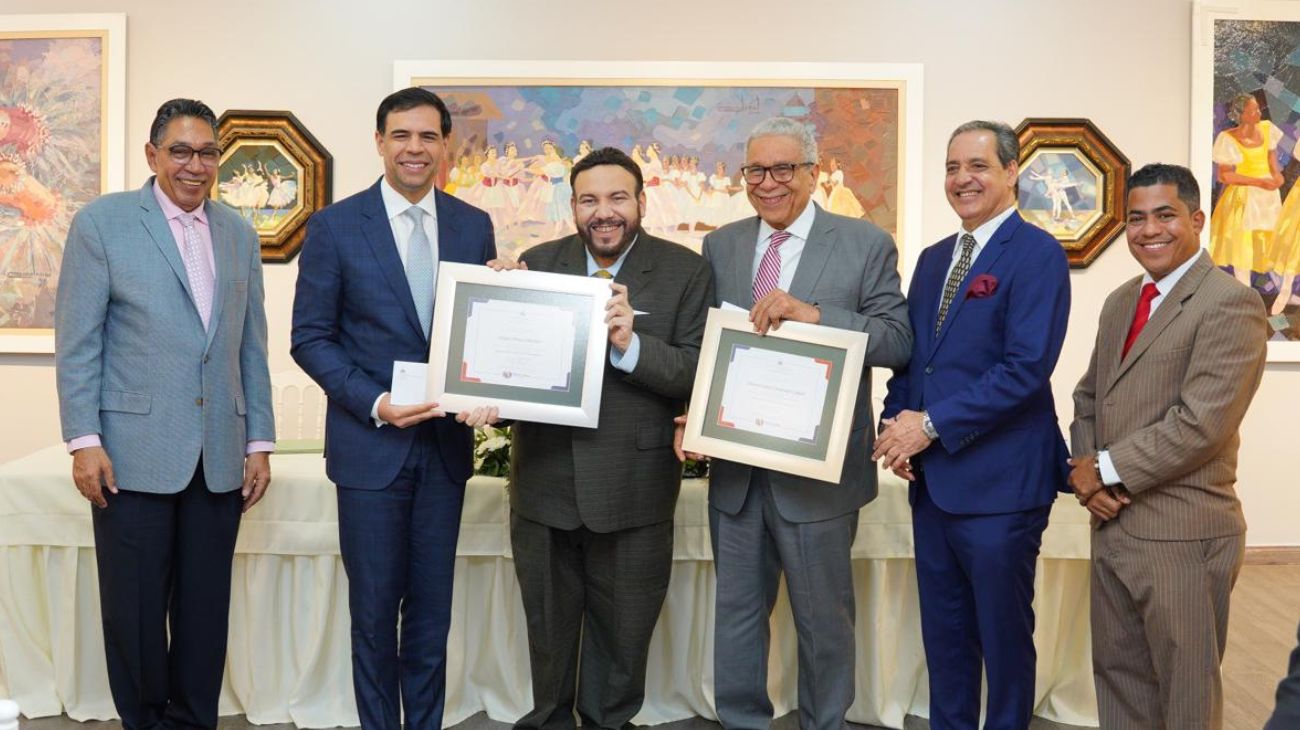
SANTO DOMINGO, Dominican Republic — The Dominican Republic's Ministry of Culture today presented its 2025 Annual Literature Prizes and the 2024 José Gabriel García Annual History Prize during a ceremony led by Culture Minister Roberto Ángel Salcedo at the Ramón Oviedo Gallery within the ministry's headquarters.
The event brought together cultural authorities, prominent writers, researchers, and media representatives to celebrate outstanding literary and historical contributions to the nation. Minister Salcedo was joined by Pastor de Moya, Vice Minister of Cultural Identity and Citizenship; Aquiles Julián Barreras, Director General of Books and Reading; and Fari Rosario, Director of Literary Management.
The winners in the various categories were initially announced last July. The 2024 José Gabriel García Annual History Prize was awarded to Miguel Reyes Sánchez and Alberto Despradel Cabral for their research titled “Historia de la frontera dominico-haitiana.” Reyes Sánchez is a historian, lawyer, and diplomat with over 40 published works and two previous wins for this prize. Despradel Cabral, also a diplomat and historian, has served as an ambassador in several countries.
The history prize carries a cash award of 500,000 Dominican pesos (RD$), a recognition diploma, and publication of the work by the National Publishing House. Winners of the Annual Literature Prizes each receive 300,000 RD$, a diploma, and publication of their respective works.
In the literary categories, the 2025 Salomé Ureña de Henríquez Annual Poetry Prize went to poet, narrator, playwright, and academic César Israel Sánchez Beras for his collection “Ciudad caníbal.”
The 2025 José Ramón López Annual Short Story Prize was awarded to César Augusto Zapata Santos for “Los sueños también son espejos.” Zapata, a poet, essayist, and narrator, boasts extensive teaching experience and a literary output featured in international anthologies. His past accolades include the 2004 Casa de Teatro International Poetry Prize and the Pedro Mir Literature Prize, which he has won twice.
The 2025 Manuel de Jesús Galván Annual Novel Prize recognized Jesús María Pérez Martínez for his work “Espejuelos, náufrago en el mar Caribe.” Born in Valencia, Spain, Pérez Martínez has resided in the Dominican Republic since 1986, considering it his “literary home.” He had a career in journalism before dedicating himself to fiction.
For theater, the 2025 Cristóbal de Llerena Annual Theater Prize honored Arístides Radhamés Polanco for his play “Crónicas del aquí y de ahora (Crónica del puente).” Polanco, whose career spans pedagogy, theater, and art history studies in the Dominican Republic and Europe, is also a respected professor, actor, director, and researcher. His son, Heliot Polanco Tineo, accepted the award on his behalf.
The 2025 Pedro Henríquez Ureña Annual Essay Prize was presented to Fernando de Jesús Reynoso Cabrera for “La utopía de América en ‘Hojas de hierba’, de Walt Whitman.” Reynoso is a university professor, poet, visual artist, and critic known for his contributions to contemporary art, cultural management, and academic research. He is also a member of the Dominican Academy of Language.
Finally, the 2025 Aurora Tavárez Belliard Annual Children's and Youth Literature Prize was awarded to Brunilda Altagracia Contreras Núñez for “De Juliana a Julián.” Contreras is an author, communicator, and reading promotion specialist with more than a dozen published titles, including the 2024 National Library Prize for Children's Literature.
The ceremony concluded with a vote of thanks delivered by historian Miguel Reyes Sánchez on behalf of all the honorees, followed by a celebratory toast. The Ministry of Culture affirmed its commitment to fostering national literary production and strengthening written culture as a cornerstone of social development.
Sources
Related News
World Bank Officials Praise Dominican Republic's Economic Stability
3 min read
Dominican Republic Launches $106 Million Fund for Irrigation Upgrade
3 min read
Dominican Republic to Overhaul 496 Schools with RD$2 Billion Investment
3 min read
Dominican Government Settles $104 Million Debt with Small Farmers
3 min read