Dominican Republic Housing Market Impact on Locals: What Buyers Should Know
The Dominican Republic's housing market impact on locals has two sides, and neither is simple. Property prices are climbing 10-11% per year. The country welcomed 11.7 million tourists in 2025 and pulled in a record $4.5 billion in foreign direct investment in 2024. You're likely thinking about buying property here. And you want to know what that means for the people who already call this place home.
The short answer: the DR's growing real estate market creates both real economic gains and real cost-of-living pressures for Dominicans. GDP per capita has grown 4.7 times since 2003. Poverty has dropped from over 40% to roughly 19%. But property in Santo Domingo now costs 10-12 years of median household income, and mortgage rates near 12% keep many locals locked out of buying. Knowing the full picture makes you a better-informed buyer, not a guilty one.

View text version of this infographic
Economic Gains:
GDP Per Capita: $2,460 (2003) to $11,542 (2024)
Poverty Rate: 40%+ (early 2000s) to approximately 19% (2024)
Tourism Employment: 893,000 jobs, 17.9% of workforce
Foreign Direct Investment: $4.5 billion record in 2024
Affordability Challenges:
Home Cost in Santo Domingo: 10-12 years of median income (vs. 7-9 years in Bogota or Lima)
Mortgage Interest Rates: Near 12%, mortgage market only 5.5% of GDP
Housing Deficit: 2.1 million units short, growing by 50,000-60,000 per year
Price Growth over 10 Years: approximately 90% in pesos, approximately 35% inflation-adjusted
Source: World Bank, WTTC, Central Bank of DR
The Economic Upside: How Growth Lifts Dominican Communities
The DR has the fastest-growing economy in the Caribbean, and real estate is a big reason why. GDP per capita went from $2,460 in 2003 to $11,542 in 2024. That's not just a number on paper. It means more Dominicans earning more money, with a growing middle class that barely existed 20 years ago.
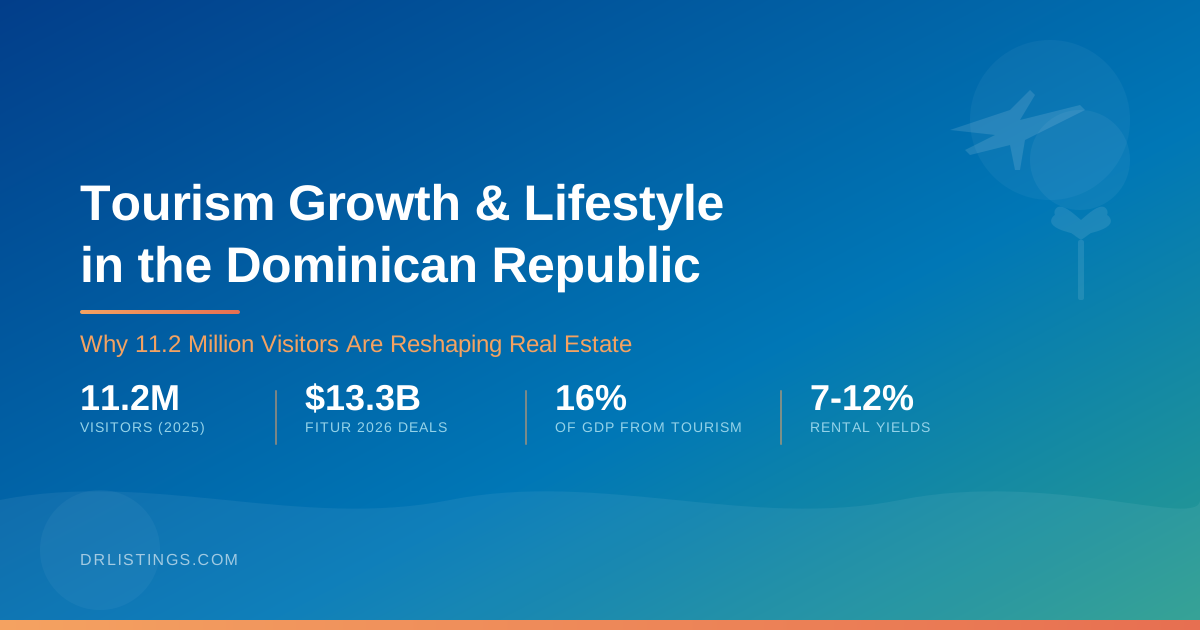
Tourism drives a huge piece of this. The sector employs around 893,000 workers, about 17.9% of the national workforce, per World Travel and Tourism Council data. By 2035, that number should grow by another 87,000 jobs. These aren't just hotel front-desk roles. They include construction crews, property managers, landscapers, restaurant owners, drivers, and the supply chains behind them.
Construction alone accounts for more than 7% of GDP. Around Punta Cana, the government says one out of every five pesos in the local economy comes from the construction sector. A project like Cap Cana doesn't just build luxury homes. It keeps thousands of local workers employed and supports Dominican suppliers in concrete, furniture, and everything in between.
The public works that follow investment help everyone, not just property owners. Santo Domingo's Metro Line 2C is adding a 7.3-kilometer extension. New roads connect once-isolated towns to economic centers. A $90 million renovation of the Colonial City preserves Dominican heritage while creating jobs. These projects happen because the tax base and Dominican Republic economy and investment climate can support them.
The poverty reduction numbers tell the clearest story. When an economy cuts its poverty rate by more than half in two decades, that's not a minor shift. Millions of Dominicans now have access to education, healthcare, and consumer goods that weren't within reach a generation ago. Real estate and tourism growth didn't cause this alone, but they are among the largest factors.
The Dominican Republic Housing Market Impact on Locals: Affordability Challenges
None of that means the housing market works well for everyone. It doesn't, and pretending otherwise would be dishonest.
In Santo Domingo, a typical apartment costs 10-12 years of median household income. Compare that to 7-9 years in similar Latin American cities like Bogota or Lima. Dominican Republic real estate affordability has shifted fast: property prices have risen roughly 90% over the past decade in peso terms, or about 35% after adjusting for inflation. Local wages haven't kept pace in every bracket.
Mortgage access is another barrier. Peso home loans carry interest rates near 12%, which makes monthly payments steep for middle-income earners. The mortgage market covers only about 5.5% of GDP, so most buyers pay cash. If you don't have the cash saved up, buying a home is hard no matter the listing price.
Developers have also moved toward luxury and resort projects, where profit margins are higher. This creates a supply gap: the country has a housing deficit of roughly 2.1 million units, growing by 50,000-60,000 each year. But much of the new building targets foreign buyers or upper-income Dominicans. What gets built isn't always what's needed.
There's also a two-tier pricing split in popular areas. USD-listed properties are priced for foreign buyers. Peso-listed properties serve the local market. In places like real estate in Sosua and Cabarete properties, this gap is clear. Walk down the same street and you'll see condos at $200,000 next to apartments renting for 15,000 pesos a month.
What the Dominican Government Is Doing About It
The Dominican government isn't ignoring these cost pressures. Several programs target the gap head-on.
The biggest is the Plan Nacional de Viviendas "Familia Feliz," backed by a $100 million World Bank loan approved in 2022. The program aims to help 44,000 households buy their first home by 2026. It offers two forms of help. The Bono Inicial Familiar covers part of the down payment. The Bono Tasa reduces interest rates for the first seven years of a loan. Both focus on low- and middle-income families.
The results so far are real. The national housing deficit dropped from 33.1% in 2022 to 25.7% in 2024, a 7.4-point drop in two years. Ciudad Juan Bosch, a large project with over 14,000 homes built on government land, is one of the most visible examples. Government policies also encourage banks to direct more lending toward affordable housing, pushing private institutions to serve a market they'd otherwise skip.
The Plan Mi Vivienda gives basic housing units to the lowest-income Dominicans. These programs won't close the deficit overnight, but they show serious public spending on the problem. English-language real estate coverage rarely mentions any of this, which leaves foreign buyers with a partial picture.
How Responsible Investment Strengthens Dominican Communities
Foreign investment in the DR isn't harmful by default. The government actively encourages it through laws like CONFOTUR tax benefits (Law 158-01) and Law 171-07. The U.S. State Department's investment climate report confirms that foreign and local investors get equal legal treatment.
But where and how you invest does matter. Here are some practical points:
Buy from developers who hire locally. The best Dominican developers use local labor for construction and source materials locally. They also create lasting jobs through property management after the build wraps up. Every property needs ongoing upkeep, security, landscaping, and cleaning. Those are steady local jobs.
Support local businesses. Shop at the colmado, eat at Dominican-owned restaurants, and hire local tradespeople. That keeps money in the community instead of flowing back to global chains.
Think about the diaspora factor. Dominican Americans buying property back home are a growing part of the market. They bring foreign capital along with local knowledge, family ties, and a personal stake in how the community does. This kind of responsible real estate investment in the Dominican Republic blends in rather than stands apart.
Look at eco-friendly development. The Samana Peninsula earned a 2024 Ecotourism Province label, and areas like Las Terrenas draw buyers who care about the environment. Eco-focused projects tend to have better long-term ties with nearby communities.
Short-term rentals, when run well, also feed the DR housing market local economy. Your guests eat at local restaurants, book local tours, and spend money that reaches small business owners directly. The key is management that respects neighbors and follows local rules.
If you're looking into the buying process, the how to buy property in the Dominican Republic guide covers the steps. The Dominican Republic mortgage guide for foreigners explains financing options for foreign buyers.
Frequently Asked Questions
Is Dominican Republic real estate overpriced for locals?
In major cities, yes, relative to local incomes. Santo Domingo apartments require 10-12 years of median household income, compared to 7-9 years in other Latin American cities. Mortgage rates near 12% make financing hard, and the mortgage market is small at just 5.5% of GDP. Outside of major urban areas and tourist zones, prices stay more within reach, but the gap is growing.
How does foreign investment benefit the Dominican Republic economy?
Foreign direct investment hit a record $4.5 billion in 2024. That money funds construction that employs hundreds of thousands of Dominicans and public works that serve local communities. The tourism sector alone supports roughly 893,000 jobs, about 17.9% of the workforce. GDP per capita has grown from $2,460 to $11,542 since 2003, driven largely by real estate and tourism.
What is the Dominican Republic doing about affordable housing?
The government's main program is Plan Nacional de Viviendas "Familia Feliz," backed by a $100 million World Bank loan. It gives down payment help and mortgage rate cuts to low- and middle-income families, targeting 44,000 households by 2026. The housing deficit has already dropped from 33.1% to 25.7% between 2022 and 2024.
Can Dominican locals afford to buy homes?
It depends on the area and income level. The growing middle class has more buying power than any past generation, and government programs help first-time buyers. But in Santo Domingo, Punta Cana, and popular tourist zones, prices have outrun local wages. Most Dominican home purchases are cash deals because high interest rates make mortgages too expensive.
How does tourism affect housing prices in the Dominican Republic?
Tourism drives demand for short-term rental properties and resort-area real estate, which pushes prices up in those zones. Areas with heavy tourist traffic like Punta Cana, Bavaro, and the North Coast have seen the steepest price jumps. The effect is weaker in non-tourist cities and rural areas, where the local housing market runs more on its own.
Is pricing displacement a problem in the Dominican Republic?
Cost pressures exist in areas with heavy foreign investment, especially along the North Coast and in parts of Santo Domingo. USD-listed properties put many local buyers out of range. But this pattern differs from places like Puerto Rico. The DR has its own legal and economic setup, a large domestic economy, and active government housing programs working to close the gap.
What percentage of Dominican Republic workers are employed by tourism?
Per World Travel and Tourism Council data, about 893,000 Dominican workers hold jobs tied directly or indirectly to tourism. That's roughly 17.9% of the national workforce. The number should grow by another 87,000 jobs by 2035 as DR tourism growth and lifestyle keeps expanding.
David Logan
site_adminRédacteur contributeur pour DRListings.com, partageant des perspectives sur l'immobilier en République dominicaine.
Commentaires
Connectez-vous pour rejoindre la conversation