

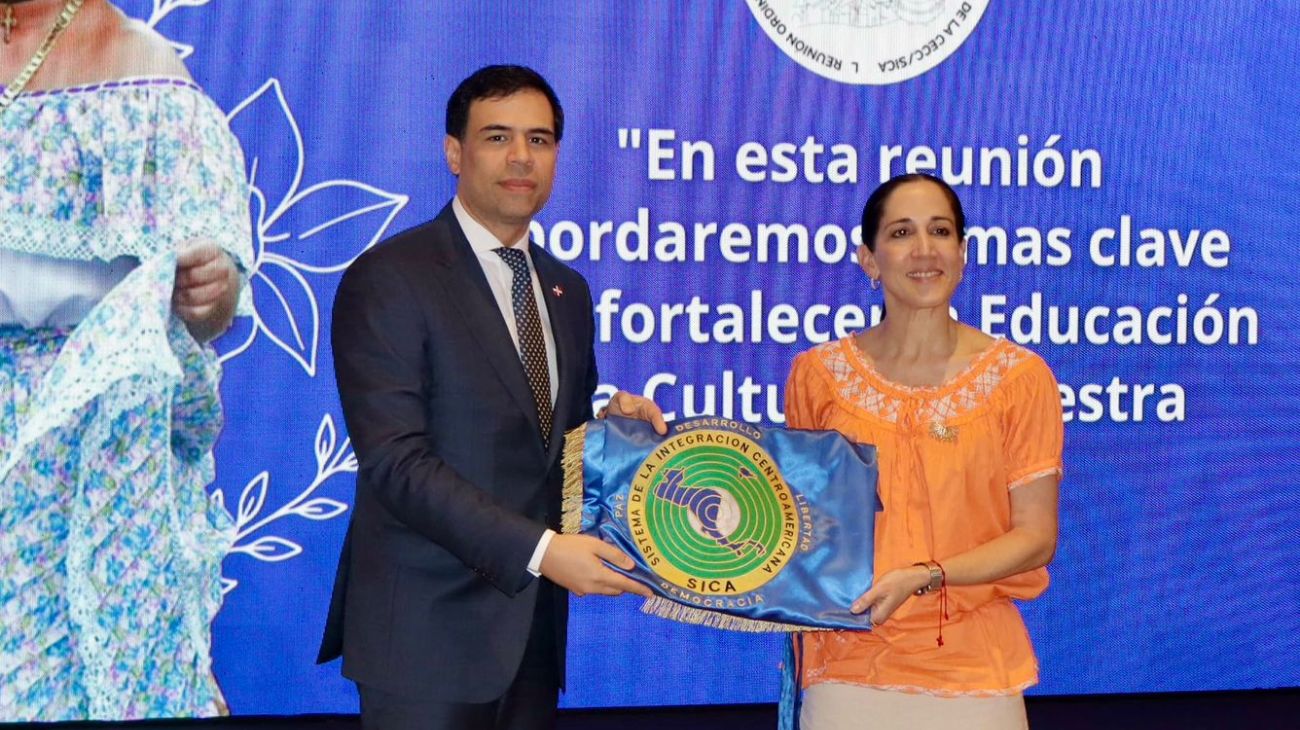
PANAMA CITY – Dominican Republic's Minister of Culture, Roberto Ángel Salcedo, assumed the pro tempore presidency of the Council of Ministers of Education and Culture of the Central American Educational and Cultural Coordination System (CECC/SICA) at the conclusion of its 50th Ordinary Meeting. The gathering took place in the Panamanian capital from Dec. 9-11, where Salcedo outlined the nation's key cultural commitments and priorities for the region.
Addressing regional delegations, Salcedo emphasized progress made during the Council of Culture's session. He specifically lauded the Afro-descendant Intangible Cultural Heritage Project, calling it a crucial initiative for highlighting and dignifying the legacy of Afro-descendant communities throughout Central America and the Caribbean.
The minister underscored the Dominican Republic's commitment to safeguarding living heritage and to processes that bolster regional identity, historical memory, and social cohesion.
Salcedo also acknowledged UNESCO's technical leadership in the Artificial Intelligence Project. He urged advancements toward ethical and governance frameworks to leverage AI for heritage management, strengthening cultural industries, and promoting digital inclusion.
In this context, Salcedo noted that the Dominican Republic recently hosted the First International Congress of Cultural Innovation. This event brought together managers, artists, technologists, researchers, and international experts to discuss creativity, cultural rights, and digital creation.
Salcedo further presented the Dominican experience in disaster risk management for cultural heritage, drawing from efforts in Santo Domingo's Colonial City. This included developing a comprehensive Disaster Risk Management Plan for the historic site.
He elaborated that this work involved methodological workshops from the Acerca program, technical exercises like calculating museum carrying capacity, and participation from public institutions, neighborhood associations, and municipal authorities. Outcomes included enhanced technical and institutional capabilities, the creation of risk planning tools, and progress in updating regulations for the historic center.
Regarding Mondiacult 2025, Salcedo voiced support for regional follow-up on its outcomes. He commended Panama's proposal, made in its capacity as pro tempore president, to integrate culture as a priority objective in the Global Development Agenda beyond 2030, an initiative that was incorporated into the final declaration.
Additionally, the minister celebrated the signing of a letter of understanding between CECC/SICA and CEMAC, which paves the way for South-South cooperation between Central America, the Caribbean, and Central Africa on cultural, educational, and heritage matters.
Salcedo reiterated the Dominican Republic's dedication to active, results-oriented, and inclusive cultural integration. He affirmed that regional cooperation is vital for addressing common challenges, ranging from artistic mobility and training for young creators to heritage protection and digital transformation.
By assuming the pro tempore presidency during the meeting's closing session, the Dominican Republic will now lead the regional educational and cultural agenda for the upcoming semester.
Sources
Related News
World Bank Officials Praise Dominican Republic's Economic Stability
3 min read
Dominican Republic Launches $106 Million Fund for Irrigation Upgrade
3 min read
Dominican Republic to Overhaul 496 Schools with RD$2 Billion Investment
3 min read
Dominican Government Settles $104 Million Debt with Small Farmers
3 min read