Is the Dominican Republic Safe? What Visitors and Expats Need to Know
The Dominican Republic is generally safe for visitors and expats. It carries the same Level 2 travel advisory as France and Italy. Tourist areas like Punta Cana, Cabarete, and Las Terrenas have low crime rates and dedicated tourist police. The main risks are petty theft and road safety, both manageable with basic precautions.
"Is the Dominican Republic safe" is a question that deserves more than a one-liner. More than 10 million visitors came to the DR in 2024, and tens of thousands of American, Canadian, and European expats call it home. Most have safe, uneventful trips. But like any country, the DR has risks worth knowing about before you book a flight or sign a lease.
This guide covers safety from both sides: short-term visitors staying at resorts or exploring the island, and people thinking about a longer stay as expats or property buyers. We will walk through crime data, the safest areas, what to watch out for, and practical tips that actually help.
What the Dominican Republic Travel Advisory Says in 2026
As of 2026, the U.S. State Department rates the Dominican Republic at Level 2: "Exercise Increased Caution." That sounds serious until you realize the same rating applies to France, Italy, Germany, Belgium, and the United Kingdom. It is the second-lowest level out of four.
What does Level 2 mean in practice? It means crime exists and you should stay aware of your surroundings. The advisory flags violent crime including armed robbery, homicide, and sexual assault. But it does not warn of political instability, terrorism, or civil unrest.
Canada's government issues a similar advisory. The UK Foreign, Commonwealth and Development Office also advises caution, particularly near the Haitian border. None of the three major government sources say to avoid the Dominican Republic.
The advisory wording can sound alarming if you read it alone. But compare it to advisories for other popular vacation spots and the DR lands in the "normal precautions plus common sense" range.
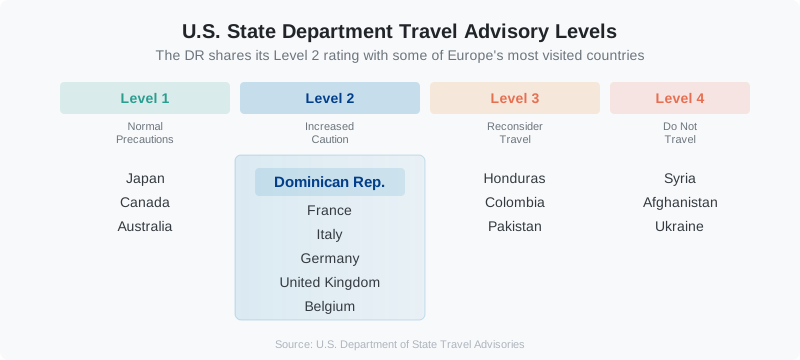
View text version of this infographic
U.S. State Department Travel Advisory Levels:
Level 1 (Normal Precautions): Japan, Canada, Australia
Level 2 (Exercise Increased Caution): Dominican Republic, France, Italy, Germany, United Kingdom, Belgium
Level 3 (Reconsider Travel): Honduras, Colombia, Pakistan
Level 4 (Do Not Travel): Syria, Afghanistan, Ukraine
The Dominican Republic shares its Level 2 rating with some of Europe's most visited countries.
Dominican Republic Crime Rate: What the Numbers Actually Show
Most articles about Dominican Republic safety either skip crime stats or toss out vague warnings. Here are the actual numbers.
The DR's homicide rate was roughly 11.5 per 100,000 people in 2023, and it has been dropping year over year. The Latin American average is around 18 per 100,000. Mexico sits at about 23, Brazil at around 19. The DR is well below the regional average and still improving.
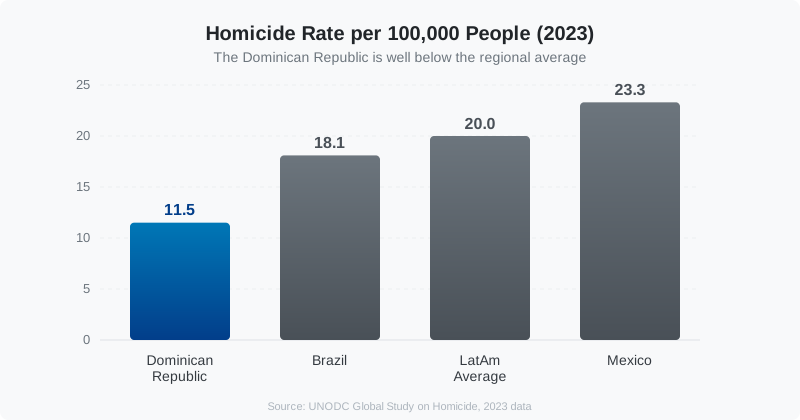
View text version of this infographic
Homicide Rate per 100,000 People (2023):
Dominican Republic: 11.5
Latin American Average: 18
Brazil: 19
Mexico: 23
The Dominican Republic's homicide rate is roughly half of Mexico's and well below the regional average. Source: UNODC and national police data, 2023.
The breakdown matters too. Dominican police data shows that around 43% of homicides stem from personal conflicts like fights and domestic disputes. Only about 11% are tied to organized crime. This is not a cartel-driven country like parts of Mexico or Central America. The violence that does exist is mostly between people who know each other, and it rarely involves foreigners.
For visitors, the real risk is petty crime. Pickpocketing, phone snatching, and bag theft are the most common problems, especially in crowded areas and on public beaches. In Santo Domingo, drive-by motorcycle theft of phones and bags happens in certain neighborhoods. Credit card cloning at standalone ATMs is another known risk.
Violent crime against tourists is rare by the numbers. The vast majority of the millions who visit each year leave without any safety incident.
Safest Places in the Dominican Republic
Safety in the DR varies a lot by location. The places where foreigners visit, live, and buy property are among the safest in the Caribbean.
Punta Cana, Bavaro, and Cap Cana are the safest zone in the country for visitors. The area has heavy tourist police (CESTUR) presence, and most resort communities are gated. Crime targeting tourists here is very low. If safety is your top concern and you want a beach vacation, Punta Cana is the simplest answer. The nearby areas of Bavaro and Cap Cana offer the same security with different price points and property types.
Cabarete and Sosua on the North Coast have large expat communities with thousands of long-term foreign residents. Crime rates are lower than in urban centers, and the towns are small enough that you get to know your neighbors. Cabarete draws younger expats, kiteboarders, and remote workers. Sosua attracts retirees and families. Both sit along the North Coast, which has a relaxed, small-town feel compared to the resort zones.
Las Terrenas on the Samana Peninsula has a strong French and European expat community and very low crime. The town has a walkable center, good restaurants, and the kind of relaxed vibe where people leave their doors unlocked. Las Terrenas and the wider Samana Peninsula are consistently among the safest areas for foreigners in the DR.
Puerto Plata has tourist infrastructure and CESTUR presence, making it reasonably safe with basic precautions. Puerto Plata is less polished than Punta Cana but has lower prices and a more local Dominican feel.
Santo Domingo is the capital and largest city, so it has more crime than smaller towns. The upscale neighborhoods of Piantini, Naco, Evaristo Morales, and the Colonial Zone during daylight are safe and popular with expats. Santo Domingo needs more street awareness than beach towns, like any major Latin American capital.
Jarabacoa and Constanza in the Central Highlands are quiet mountain towns with very low crime. Jarabacoa draws visitors looking for cooler weather, hiking, and a slower pace.
For property buyers, gated communities add another layer of security. Many expats in the DR live in developments with 24-hour guards, walls, and controlled entry. If you are thinking about buying here, our guide to buying property in the Dominican Republic covers the full process.
Areas to Avoid
Being honest about safety means naming the places you should skip.
The Haitian border zone is the most obvious. There is no tourist or real estate activity near the border, and the Dominican military keeps a heavy presence there. Stay at least 10 kilometers away.
In Santo Domingo, avoid Cristo Rey, Villa Consuelo, Villa Juana, Villa Agricola, and Los Praditos. These are low-income areas with higher crime rates, and there is no reason for a visitor or expat to be there.
Boca Chica, a beach town close to Santo Domingo, is fine during the day but has a rough reputation at night, especially around the bars and clubs near the beach.
As a general rule, stay out of unfamiliar areas after dark, especially alone. This applies anywhere, but it matters more in the DR because street lighting outside main commercial areas can be poor.
The Haiti Question
Many people searching "is the Dominican Republic safe" are really asking about Haiti. The ongoing instability in Haiti makes headlines, and since the two countries share an island, the concern makes sense at first glance.
Geography tells a different story. Punta Cana is roughly 300 kilometers from the nearest point on the Haitian border. Cabarete and Sosua on the North Coast are about 130 kilometers from the nearest border crossing at Dajabon. Worrying about Haiti while visiting Punta Cana is like worrying about Tijuana while visiting Miami. They share a landmass but operate in completely different realities.
The Dominican government has invested heavily in border security. Over 11,000 troops are deployed along the border. A border wall standing 3.9 meters high is under construction, with fiber optic sensors, cameras, drones, and roughly 70 watchtowers along its length. Land and sea borders between the two countries have stayed closed during the worst of Haiti's crisis.
Haiti's problems have not caused safety issues in Dominican tourist or expat areas. The two countries have very different economies, governments, and infrastructure. While the situation in Haiti is serious, it does not spill across the border into the areas where foreigners visit and live.
Road Safety: The Biggest Actual Risk
This is the part most safety articles skip. The Dominican Republic has one of the highest traffic fatality rates in the world at roughly 65 deaths per 100,000 people. If something dangerous happens to you in the DR, it is far more likely to involve a road than a criminal.
What makes the roads dangerous? Traffic law enforcement is minimal. Speeding is normal. Motorcycles weave through traffic without helmets. Traffic signals get ignored. Drunk driving is common, especially on weekends and holidays.
The good news: you have options that keep you off the road. Uber works in Santo Domingo, Santiago, and Puerto Plata. In tourist areas like Punta Cana and Cabarete, hiring a private driver for the day costs $50-$80 USD and is worth every dollar. Resort transfers handle airport runs. Many long-term expats skip driving entirely and use ride-hailing apps and hired drivers.
If you do drive, stick to daylight hours, use the major highways (which are well-maintained), avoid motorcycles entirely, and drive defensively. The autopistas connecting major cities are modern divided highways. The problem roads are the secondary routes through towns and rural areas.
Health and Water Safety
Do not drink the tap water. This is non-negotiable. Bottled water is cheap (about 50 cents for a large bottle) and sold everywhere. Ice in hotels, resorts, and established restaurants is usually made from purified water and is safe.
Mosquito-borne illness, especially dengue, is a real concern. The DR ran a major dengue prevention campaign in 2025 that reportedly cut cases by over 85%, but mosquitoes are still a fact of life. Use repellent, especially at dawn and dusk.
Healthcare quality depends on where you are and whether you go public or private. Private hospitals in Santo Domingo, Santiago, and Punta Cana are good, with English-speaking doctors and modern equipment. Public hospitals are underfunded and overcrowded. Avoid them if you can.
For visitors, travel insurance with medical evacuation coverage is a smart buy. Policies covering helicopter evacuation to Miami are available and affordable. For expats, private healthcare costs much less than in North America. A private clinic visit typically costs around $60 USD out of pocket. Monthly health insurance plans run $80-$200 USD depending on age and coverage level.
Natural Disaster Preparedness
Hurricane season runs from June through November. September and October are the peak months. The DR does get hit by hurricanes, but direct hits on the most popular areas are fairly rare. The island's mountain ranges can weaken storms as they cross, and the Mona Passage currents between the DR and Puerto Rico affect storm paths.
Modern resorts and newer buildings are built to hurricane-resistant standards. If you are buying property, construction quality and storm preparedness should be part of your due diligence.
Earthquake risk is moderate. The island sits on a fault line, and small tremors happen roughly once a year. Major earthquakes are rare but possible.
The Dominican Center for Emergency Operations (COE) runs disaster response and issues color-coded alerts during weather events. U.S. citizens should enroll in STEP (Smart Traveler Enrollment Program) through the embassy for real-time alerts.
Practical Safety Tips
These are the things that actually lower your risk day to day:
Use ATMs inside banks or hotel lobbies only. Standalone ATMs on the street are where card cloning happens.
Keep your phone out of sight on the street, especially in Santo Domingo. Do not walk while looking at your screen.
Use Uber or hotel-arranged transport instead of flagging random taxis.
Leave expensive jewelry and watches at home or in your hotel safe.
Stay in well-lit, populated areas at night. If a street feels empty and dark, turn around.
If someone tries to rob you, do not resist. Hand over your things. They are replaceable.
Learn basic Spanish phrases. Even simple greetings and the ability to ask for help go a long way.
Get travel insurance with medical evacuation coverage before you arrive.
Register with your embassy. U.S. citizens can use STEP. Canadians can register with Global Affairs Canada.
Safety for Different Traveler Types
Solo female travelers can visit the DR safely with precautions. Unwanted attention and catcalling happen more often than in North America, but they rarely go beyond words. Stick to resort areas and tourist zones, use ride-hailing apps instead of street taxis, and avoid isolated areas at night. Many solo female travelers visit every year without problems.
Families do well in the resort areas, especially Punta Cana and the North Coast. Kid-friendly activities are well-organized at resorts, beaches are clean and swimmable, and the tourist setup supports families. The East Coast resort areas are built for this kind of travel.
Expats and property buyers think about safety differently because they are here long-term. The good news: expat communities in Cabarete, Sosua, Las Terrenas, and Punta Cana have been around for years, with thousands of foreign residents who have lived safely for years or decades. Gated communities provide solid security. Long-term residents build local knowledge that keeps them safe. You learn which areas to avoid, which drivers to trust, and how daily life works. For a detailed side-by-side with another popular expat destination, see our Mexico vs Dominican Republic comparison.
Frequently Asked Questions
Is the Dominican Republic safe for American tourists?
Yes. The DR carries the same Level 2 travel advisory as France and Italy. More than 10 million visitors come each year, the vast majority without incident. Tourist areas have dedicated tourist police, and violent crime against visitors is rare. Use common sense with your belongings and stick to known tourist areas.
Is Punta Cana safe to visit?
Punta Cana is the safest area in the Dominican Republic for visitors. The zone has heavy CESTUR (tourist police) presence, gated resort communities, and very low crime rates targeting tourists. It is built for tourism and kept that way.
Is it safe to leave the resort in the Dominican Republic?
Yes, with basic awareness. Millions of visitors explore towns, beaches, and restaurants outside resort walls every year. Leaving the resort in Punta Cana, Cabarete, Las Terrenas, or Puerto Plata is safe during the day. At night, stick to busy, well-lit areas and use a ride-hailing app or hotel transport.
Is the Dominican Republic safe for solo female travelers?
The DR is generally safe for solo female travelers who take normal precautions. Catcalling is more common than in North America but rarely goes beyond words. Use ride-hailing apps, stay in tourist areas, avoid isolated spots at night, and trust your instincts. Many women travel solo in the DR without issues.
Is the Dominican Republic dangerous because of Haiti?
No. Tourist and expat areas are 130-300 kilometers from the Haitian border. The Dominican military has over 11,000 troops along the border and is building a fortified border wall. Haiti's problems have not caused safety issues in Dominican tourist or expat zones. The two countries share an island but have very different security situations.
What is the safest area in the Dominican Republic?
Punta Cana and the nearby areas of Bavaro and Cap Cana are the safest for visitors, with heavy tourist police presence and gated communities. For expats, Cabarete, Las Terrenas, and Jarabacoa all have very low crime and active foreign communities. The "safest" area depends on what kind of trip or lifestyle you are planning.
Is the Dominican Republic safer than Mexico?
By the numbers, yes. The DR's homicide rate of about 11.5 per 100,000 is roughly half of Mexico's rate of about 23 per 100,000. Only about 11% of Dominican homicides are tied to organized crime, compared to Mexico's large cartel presence. Both countries are safe in tourist areas, but the DR does not have the same organized crime problem that affects parts of Mexico.
Is it safe to live in the Dominican Republic as an expat?
Thousands of Americans, Canadians, and Europeans live in the DR full-time and have for years. The expat communities in Cabarete, Sosua, Las Terrenas, and Punta Cana have clubs, social groups, and support networks. Most expats live in gated communities or secure buildings, use private healthcare, and build local knowledge that keeps them safe.
Geschrieben von
David Logan
Beitragender Autor für DRListings.com, der Einblicke in Immobilien in der Dominikanischen Republik teilt.
Autor kontaktierenKommentare
Melde dich an, um an der Diskussion teilzunehmen
Anmelden zum Kommentieren