Major Infrastructure Projects Driving DR Real Estate in 2026
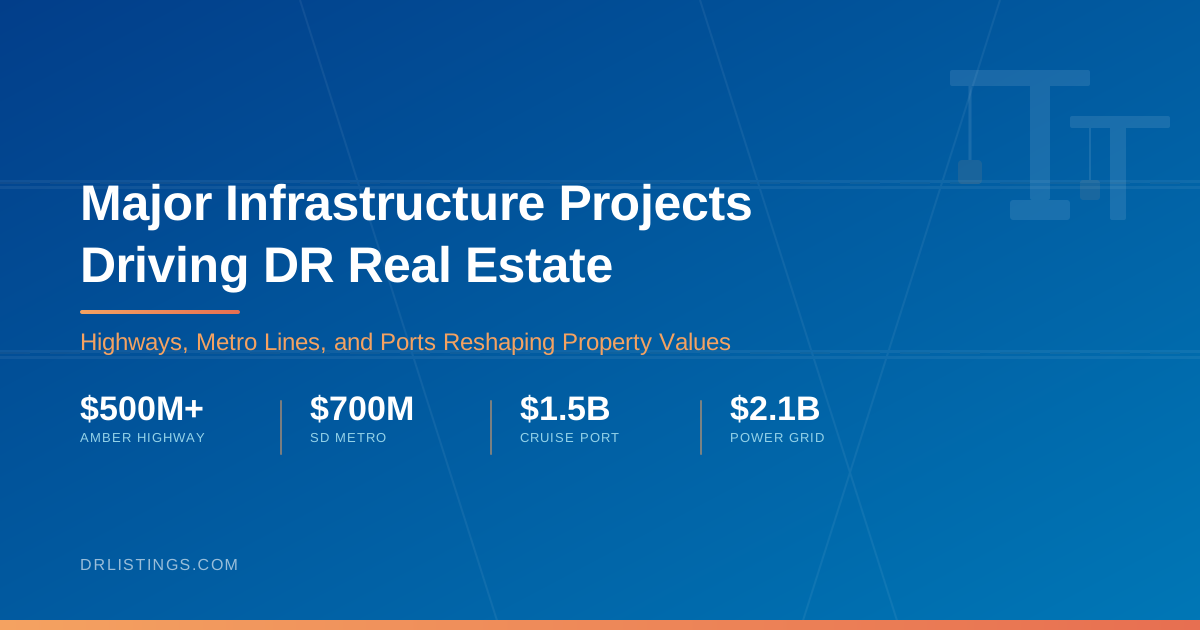
New roads, metro lines, and ports in the Dominican Republic tend to boost nearby property values by 5-10% when announced. They typically climb another 10-15% once finished. Right now, the country is spending more on DR infrastructure projects tied to real estate than it has in decades. Billions are going into highways, metro lines, cruise ports, utility systems, and digital networks all at the same time. If you are looking at Dominican Republic property, knowing which projects are underway and where they sit tells you a lot about where prices are headed.
Below is a project-by-project look at the major builds, the regions they serve, and what the price data shows so far.
How DR Infrastructure Projects Drive Property Values
The link between new infrastructure and property prices in the Dominican Republic follows a clear pattern. RealStat Caribbean corridor data shows that properties within 5 km of new transport routes gained up to 12% in value over the past 12 months. Industry data suggests prices rise 5-10% when a project is announced, then climb further once it opens.
The DR has seen this play out before. When Amber Cove cruise port opened near Puerto Plata in 2015, nearby property values climbed. The same thing happened when Taino Bay opened in 2021. Cruise passengers need restaurants, shops, taxis, and short-term rentals. That demand draws service businesses, and those businesses bring workers who need housing.
The pattern builds on itself. A new highway brings more tourists. More tourists bring more restaurants and stores. More services bring more residents. More residents push prices up. In areas like Punta Cana and Santiago, where several projects overlap, that effect is stronger than in places that rely on tourism alone.
GlobalValuation.com data for 2025-2026 shows Punta Cana at +15%, Cap Cana at +16%, and Santiago at +11%. All three are areas with active or recently finished infrastructure projects.
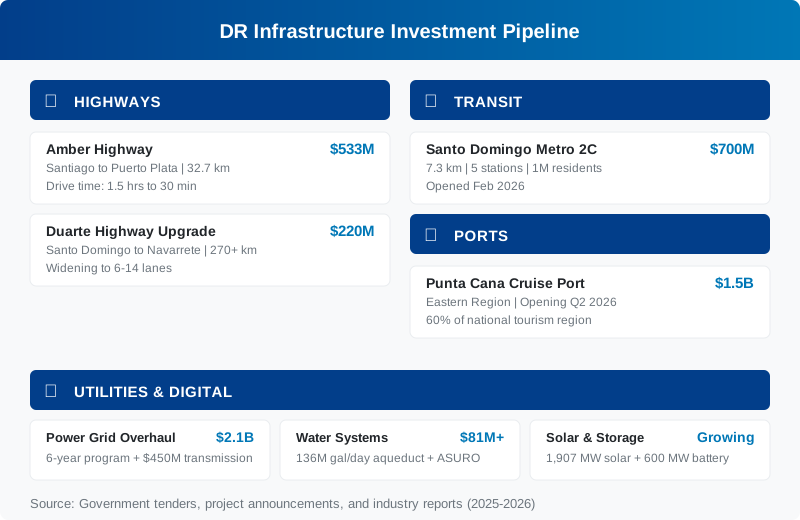
View text version of this infographic
DR Infrastructure Investment Pipeline:
Highways:
Amber Highway: $533M | Santiago to Puerto Plata | 32.7 km | Drive time reduced from 1.5 hrs to 30 min
Duarte Highway Upgrade: $220M | Santo Domingo to Navarrete | 270+ km | Widening to 6-14 lanes
Transit:
Santo Domingo Metro 2C: $550M | 7.3 km | 5 stations | 1M residents served | Opened Feb 2026
Cruise Ports:
Multiple new terminals: Cabo Rojo ($126M), Barahona, Samana Bayport, Santo Domingo ($400M planned)
Utilities and Digital:
Transmission Grid: $450M | 2025-2028 | transmission lines and substations
Water Systems: $142M+ | 136M gal/day aqueduct + $80.9M ASURO
Solar and Storage: 1,907 MW solar target + 600 MW battery tender
The Amber Highway: Santiago to Puerto Plata in 30 Minutes
The Amber Highway is the single largest Dominican Republic road construction investment right now. Its impact on North Coast real estate will be major.
The numbers: US$500-533 million for a 32.7 km highway linking Santiago to Montellano in Puerto Plata province. The design speed is 100 km/h. It includes tunnels, overpasses, bridges, drainage systems, tolling, and modern lighting. The government published the tender on November 27, 2025, with an estimated cost of RD$32 billion. Proposals are due March 20, 2026. The project is fully state-funded after an earlier plan for a public-private setup was dropped.
What changes: the drive between Santiago and Puerto Plata drops from about 1.5 hours to roughly 30 minutes. Santo Domingo to Puerto Plata shrinks from 3 hours to around 2. President Abinader has said the highway will "practically create a metropolitan area between Santiago, Moca, and Puerto Plata." Both Cibao and Gregorio Luperon international airports will be within easy reach.
The highway also connects to the Santiago bypass road and feeds into the planned Punta Bergantin zone on the coast. That link matters because it ties Santiago's interior business activity directly to North Coast tourism.
The real estate numbers already reflect these expectations. Puerto Plata properties are forecast to see 5-9% condo growth in 2026. Industry estimates project 25-45% gains over five years. The North Coast is running 3-7% annual growth as a baseline. Properties within 10-15 minutes of major project zones already sell at 10-20% premiums over similar properties farther away. Cabarete leads the coast at 10-13% growth. Sosua is tracking at roughly 10%.
Duarte Highway Upgrade: The National Spine
The Duarte Highway is the DR's most important road. It runs north from Santo Domingo through the Cibao Valley to the coast. A $220 million rebuild is upgrading 270+ km of it, covering Santo Domingo to Navarrete.
The main stretch between Santo Domingo and Santiago is being widened to 6 lanes. The Santo Domingo entrance section is growing to 14 lanes. New bridges, updated intersections, and the removal of illegal crossings are all part of the scope. A new 940-meter tunnel and 6.5 km of marginal roads along the highway are under construction.
Several sections are already done: Santiago to Navarrete, the Santiago entrance, the Ponton bridge in La Vega, and the La Vega to Santiago widening. The government has also announced plans to extend to Montecristi, plus new projects in Manzanillo Bay on the northwest coast.
For real estate, the Duarte project matters because it speeds up travel between the Cibao Valley and both Santo Domingo and the northern ports. Santiago already shows +11% property growth. Better highway access makes the city more appealing as a home base for people who work between the coast and the interior.
Santo Domingo Metro Growth and Urban Renewal
Santo Domingo has two big infrastructure stories running at the same time: the metro and the Colonial City restoration.
Metro Line 2C opened on February 25, 2026. The new stretch adds 7.3 km of track and 5 stations. It connects 14 communities in western Santo Domingo and serves about 1 million residents. Commute times from Los Alcarrizos to downtown dropped from 90 minutes to about 10 minutes. Line 2C cost an estimated US$550 million, financed in part by a US$250 million CABEI loan. The system mixes elevated track sections with a 900-meter underground tunnel and ties into Santo Domingo's cable car network for wider coverage.
Properties along metro corridors have gained 8-12% in value. Transit access directly lifts prices.
The Colonial Zone tells a different story. The government has put nearly RD$5 billion into restoring 11 streets. US$90 million in IDB funding supports the broader work. The result has been fast-moving change: 15-25% price growth over the past 2-3 years and more than 300 new restaurants, cafes, galleries, and boutique hotels. A new electric bus route (5 buses, 30 stops, 12.5 km) now links the zone to Metro Line 1.
The World Trade Center Santo Domingo project, a mixed-use complex with multiple towers including business and aparthotel space, adds to the Capital Region's business profile.
Eastern Region Growth and New Cruise Port Development
The eastern region is already the dominant real estate market in the DR. It accounts for roughly 60% of national tourism, with over 47,000 hotel rooms and thousands more under construction. The Dominican Republic is expanding its cruise infrastructure nationwide, with new terminals at Cabo Rojo ($126M), Barahona, Samana, and a planned $400 million Santo Domingo port.
Cruise ports create what analysts call "micro real estate markets" near the terminal. Demand spikes for short-term rentals, restaurants, mixed-use buildings, and entertainment. The Amber Cove and Taino Bay ports on the North Coast show how this plays out.
Beyond the cruise expansion, the San Pedro de Macoris to Miches highway is opening access to Miches. This town on the Samana Bay coast was hard to reach from Punta Cana before the road. Miches has US$1.18 billion in projected investment, 3,400 new hotel rooms, and 1,400 residential units planned. For buyers looking at earlier-stage markets, Samana Peninsula properties and the Miches corridor offer a different risk-reward profile than settled East Coast communities.
Cap Cana and Punta Cana gated communities are projected to see 6-8% annual condo growth. Industry estimates put the combined ROI from rental income and price gains at 12-18% for well-placed properties in the east.
Utility and Digital Infrastructure: The Value Drivers Nobody Talks About
Roads and transit get the headlines. But water, power, and internet access decide which areas actually grow and which ones stall.
On water: the Barrera de Salinidad Oriental aqueduct now delivers 136 million gallons per day. It serves nearly 2 million residents in Santo Domingo's eastern and northern suburbs. The project required a US$142 million investment, financed by CAF and the Dominican state. The ASURO Southwest Region Multiple Aqueduct Project adds another US$80.9 million in water work. Reliable water is a basic need for housing growth. Areas without it cannot support the density that makes real estate investment pay off.
On power: the government has committed $450 million between 2025 and 2028 for expanding transmission lines and substations. Billions more have gone into the broader electricity sector through World Bank, IDB, and government programs. Solar capacity is growing from 1,581 MW in 2025 to a projected 1,907 MW by 2027. A 600 MW battery storage tender is set for May 2026. The power grid is still the DR's weakest link, with high losses and periodic outages. But the spending pipeline is the largest the sector has ever seen.
On connectivity: fiber optic rollout and 5G service are drawing digital nomads and remote workers. This drives rental demand in areas like Cabarete and Las Terrenas where the lifestyle appeals to people who can work from anywhere.
Where Values Are Rising: A Regional Snapshot
Here is how the major regions stack up, based on 2025-2026 data:
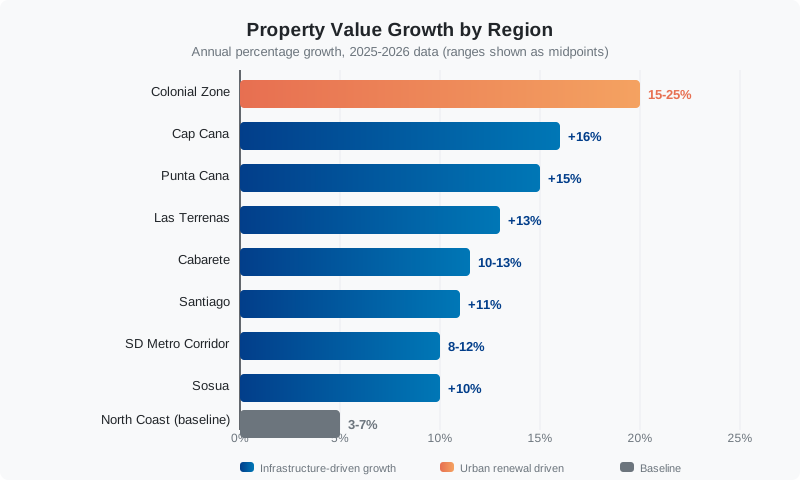
View text version of this infographic
Property Value Growth by Region (2025-2026 data):
Colonial Zone: 15-25% (urban renewal driven)
Cap Cana: +16%
Punta Cana: +15%
Las Terrenas: +13%
Cabarete: 10-13%
Santiago: +11%
SD Metro Corridor: 8-12%
Sosua: +10%
North Coast (baseline): 3-7%
North Coast (Puerto Plata, Sosua, Cabarete): 3-7% annual growth as a baseline, speeding up with the Amber Highway. Condos forecast at 7-11% for 2026. Cabarete leads at 10-13%. The Amber Highway and growing air connectivity through Cibao International Airport are the main drivers.
Cibao Interior (Santiago): +11% growth. The Amber Highway and Duarte Highway work are creating metro-area links between Santiago, the coast, and Santo Domingo. Santiago is becoming a more realistic home base for people who travel often between those three areas.
Santo Domingo: Metro corridor properties at 8-12%, Colonial Zone at 15-25%. Urban renewal and transit spending are the drivers.
East Coast (Punta Cana, Bavaro, Cap Cana): 6-8% condo growth. Expanding cruise infrastructure and new highways to Miches are widening the region's reach.
Samana Peninsula (Miches, Las Terrenas): Emerging. The Miches highway is opening new land. Las Terrenas is tracking at 13% growth. Higher risk, but earlier-stage pricing.
The pattern is steady: areas with planned infrastructure beat areas without it. If a region has no highway, port, or utility project on the way, its growth is likely to lag. For a walkthrough of the actual purchase process, see our guide on how to buy property in the Dominican Republic.
Frequently Asked Questions
How do DR infrastructure projects affect real estate values?
Properties near new transport routes in the DR have gained up to 12% in value over the past year. Industry data suggests a 5-10% price bump when a project is announced, with further gains once it opens. Areas with planned highway, transit, or port projects beat the broader market consistently.
What are the biggest infrastructure projects in the Dominican Republic right now?
The largest active projects are the US$500M+ Amber Highway (Santiago to Puerto Plata), the $220M Duarte Highway upgrade, the $550M Santo Domingo Metro Line 2C (opened February 2026), and expanding cruise port infrastructure at Cabo Rojo, Barahona, and Samana.
Is the Dominican Republic a good place to invest in real estate in 2026?
The Dominican Republic economy and investment climate supports this. The World Bank projects GDP growth averaging 4.9% for 2025-2026. Tourism reached approximately 11.6 million visitors in 2025. Industry estimates put combined ROI for properties near infrastructure at 12-18% from rental income and price gains. The CONFOTUR program gives up to 15 years of property tax relief for qualifying tourism properties.
Which areas of the Dominican Republic are growing the fastest?
Cap Cana leads at +16%, followed by Punta Cana (+15%), Las Terrenas (+13%), Santiago (+11%), and Sosua (+10%). The Colonial Zone in Santo Domingo has seen 15-25% growth driven by its restoration program.
What is the Amber Highway in the Dominican Republic?
The Amber Highway is a US$500-533 million, 32.7 km highway project linking Santiago to Puerto Plata. It will cut the drive between the two cities from 1.5 hours to about 30 minutes. The tender was published in November 2025, with proposals due March 2026. The project is fully state-funded.
How is the Santo Domingo Metro affecting real estate?
Metro Line 2C opened in February 2026, adding 7.3 km and 5 stations. Properties along metro corridors have gained 8-12% in value. The line cut commute times from western suburbs like Los Alcarrizos from 90 minutes to about 10 minutes. This makes previously underserved neighborhoods more attractive for both residents and investors.
Does the Dominican Republic have good roads and utilities?
The DR is in the middle of its largest infrastructure upgrade in decades. Major highways (Amber, Duarte) are being built or upgraded. The metro system is growing. And $450 million is committed to expanding transmission lines and substations through 2028, with billions more invested across the broader power sector. Roads between major cities are generally good and getting better. Utilities are the weaker link. The power grid still has outages in some areas, though spending is picking up fast. Water systems are being upgraded through several large aqueduct projects.
Sources
P&H Law -- Dominican Government Opens Tender for the Amber Highway
Dominican Today -- Metro Line 2C Extension Begins Operations
IDB -- Dominican Republic Colonial City Tourism and Urban Development
Strategic Energy Europe -- Dominican Republic Targets Nearly 2 GW of Solar by 2027
Dominican Today -- Government to Invest $450 Million in Electricity Transmission
DR1.com -- Abinader Inaugurates Nation's Largest Pumping Aqueduct
Chambers and Partners -- Dominican Republic Real Estate 2025 (Miches Development)
Global Valuation -- Dominican Republic Property Values: What Drives Price in 2025 and Beyond
Geschrieben von
David Logan
Beitragender Autor für DRListings.com, der Einblicke in Immobilien in der Dominikanischen Republik teilt.
Autor kontaktierenKommentare
Melde dich an, um an der Diskussion teilzunehmen
Anmelden zum Kommentieren