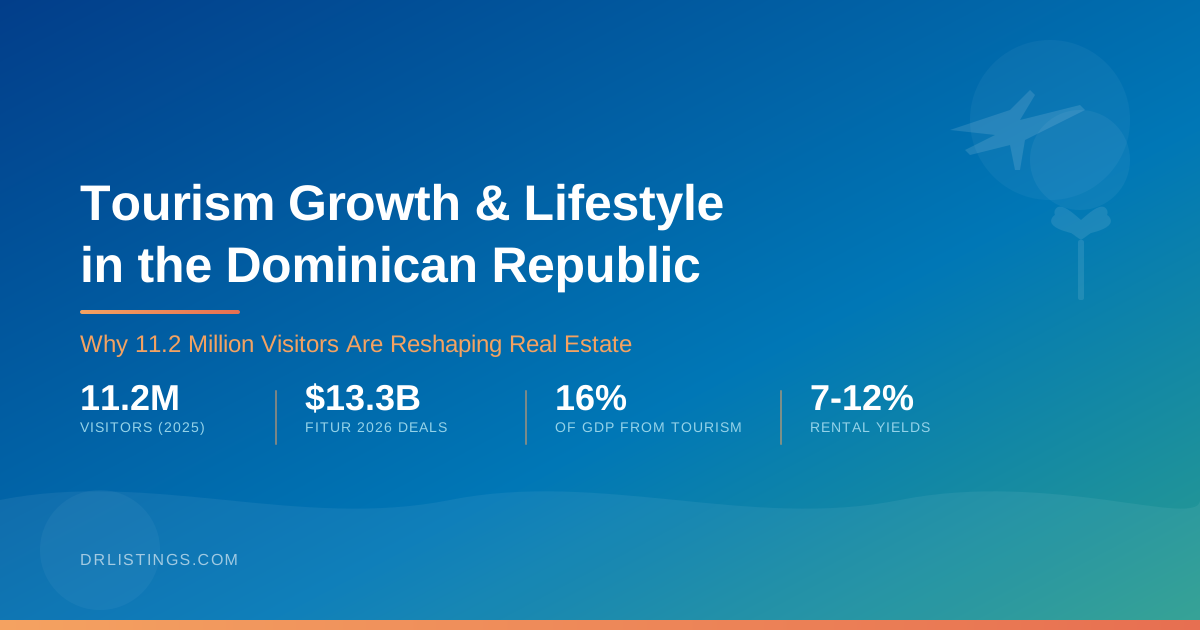
Dominican Republic Tourism Growth and What It Means for Lifestyle and Investment
The Dominican Republic welcomed over 11.6 million visitors in 2025. It started 2026 with 1.22 million arrivals in January alone. Those are not just travel industry stats. They reflect a country where roads are improving fast, flights are multiplying, and more people are choosing to stay long-term. Whether you want a vacation home, a rental property, or a full move, the Dominican Republic tourism growth lifestyle story ties directly to daily life and property ownership here.
Why is tourism growing so fast in the Dominican Republic? The country secured US$13.3 billion in deals at FITUR 2026. It expanded air access through a US Open Skies agreement. And it moved beyond beach resorts into cultural, medical, and eco-tourism. With over $1.5 billion in upgrades and 11.6 million visitors in 2025, the DR is now the Caribbean's fastest-growing tourism spot.
What Is Driving the Tourism Surge
The numbers did not appear out of nowhere. Several forces are working together.
At FITUR 2026, the Dominican Republic signed US$13.37 billion in deals. That is nearly double the US$6.75 billion committed the year before. The money is backing 10,000 new hotel rooms over three years. It is also funding mixed-use projects in places like Pedernales and Miches, areas that barely had tourism setup five years ago.
Air access is growing at the same time. The US Open Skies agreement, signed in August 2024 and entering into force in December 2024, removed route limits for airlines flying between the two countries. Arajet, the Dominican low-cost carrier, is targeting over 2 million passengers in 2026 with new routes to Miami, Newark, and Sao Paulo. Air France launched a direct Paris-to-Punta Cana route. LIAT added Santo Domingo and Punta Cana flights from the Eastern Caribbean. More flights mean more visitors, shorter travel times, and stronger demand for places to stay.
On the ground, over $1.5 billion has gone into airport and port upgrades. Punta Cana got a full refresh. Cibao Airport near Santiago is in the middle of a $300 million expansion, part of a broader $700 million national airport modernization program. La Romana has been selected as a year-round MSC cruise homeport starting November 2026, bringing a different type of visitor entirely.
The government is also pushing tourism beyond the all-inclusive model. Eco-tourism in places like Jarabacoa and Bahia de las Aguilas is getting real promotion and infrastructure investment. Cultural tourism in Santo Domingo's Colonial Zone is a priority. Medical tourism brought 270,000 visitors in 2022, with a government target of 500,000 by 2028. And dozens of global sporting events were hosted in 2024.
Tourism now accounts for roughly 16% of GDP, or about $21.1 billion in 2025, and supports more than 800,000 jobs directly and indirectly. Over half of foreign visitors are repeat travelers. That says a lot about whether the experience holds up beyond the first trip.
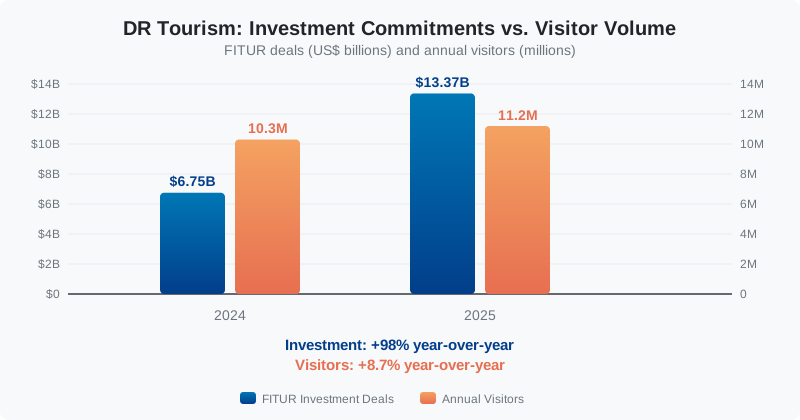
View text version of this infographic
Dominican Republic Tourism Investment and Visitor Growth:
2024: FITUR investment deals totaled $6.75 billion; annual visitors reached 11.1 million
2025: FITUR investment deals totaled $13.37 billion (+98% year-over-year); annual visitors reached 11.6 million (+4.5% year-over-year)
Beyond the Resort: Culture and Authentic Dominican Life
Here is a stat that matters more than the visitor count. 60% of foreign tourists in the DR now take part in activities outside their hotel or resort. And 84% say they would do those kinds of cultural outings again. The country is not just a place people fly into and sit by a pool for a week.
Santo Domingo's Colonial Zone is a UNESCO World Heritage Site. It has the oldest European-built structures in the Americas. The Alcazar de Colon, the Catedral Primada de America, and the streets around them are not museum pieces. People live and work there, and the restaurants, galleries, and nightlife draw both locals and visitors. Centro Leon in Santiago is one of the best art and cultural centers in the Caribbean.
Merengue and bachata are not just music genres. They are part of daily life, heard at the colmado on the corner and during the annual Carnival in February and March. La Vega's Carnival is one of the biggest in the Caribbean, with elaborate devil masks and parades that have been running since the 1500s. Smaller local festivals happen year-round across the country, drawing visitors who want something more personal than a resort show. Knowing local customs, like tipping etiquette in the DR, goes a long way in daily life.
The government has been backing this shift. A 2025 visit to Puerto Plata announced new cultural projects and spending along the North Coast. Protected areas like Los Haitises and the Dunes of Bani are getting more attention, and zero-plastic policies are being rolled out in eco-tourism zones.
For people thinking about spending more than a week, this cultural layer matters. Living somewhere is different from visiting. The DR has enough depth and variety to keep long-term residents engaged.
The Expat and Digital Nomad Lifestyle
About 14,600 Americans and Canadians live in the Dominican Republic as of 2025. They are clustered in Punta Cana, Puerto Plata, Sosua, Cabarete, and Las Terrenas. The North Coast is seeing the biggest expat growth in 15 years. New direct flights from Texas, California, and Germany arriving in 2026 are a big reason why.
The Dominican Republic quality of life case comes down to a few things. The cost of living runs roughly 49% lower than the US on average. Most expats report living well on $1,500 to $2,500 per month. Domestic help costs around $300 a month. These numbers vary by location and lifestyle, but the gap compared to US or Canadian prices is real and wide.
Internet has improved a lot. Average speeds hit 45.79 Mbps across the country, and Indotel raised the minimum broadband standard to 30 Mbps in 2025. Claro and Altice have 5G live in Santo Domingo, Santiago, and Punta Cana. Coworking spaces have opened in Cabarete, Las Terrenas, and Santo Domingo, serving the growing remote-worker crowd.
Healthcare is another plus. Private clinics and hospitals in the larger cities have doctors trained abroad, modern gear, and prices well below what you would pay in the US. A doctor visit at a private clinic runs $30 to $60 USD. Dental work costs a fraction of US prices, which is one reason medical tourism is growing.
The time zone lines up with the US East Coast (EST/AST). That makes it easy to work North American business hours without changing your schedule.
One thing to know: the DR does not have a formal digital nomad visa. Tourist visas allow 30-day stays and can be extended. For longer stays with proof of passive income, the rentier visa is the main path. It works, but it is not as smooth as the programs in some competing countries.
Short-Term Rental Demand and the Tourism-Lifestyle Link
This is where the tourism growth story connects to Dominican Republic vacation rental investment. More visitors arriving on more flights, combined with a shift away from all-inclusive stays, creates direct demand for short-term rentals.
The numbers back this up. The DR has thousands of active short-term rental listings across the country. Santo Domingo's listing count is growing at 8% per year. In Cabarete, the average host earns about $19,198 per year at 52% occupancy, with 83% of guests coming from outside the country. Punta Cana hosts average around $20,000 per year. Santo Domingo averages $13,215 at 53% occupancy. Gross yields in prime spots run between 7% and 12%, though net returns after management, upkeep, and taxes will be lower.
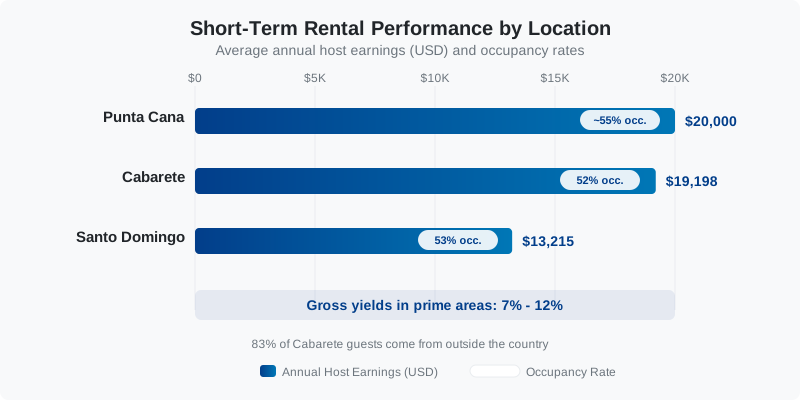
View text version of this infographic
Short-Term Rental Performance by Location in the Dominican Republic:
Punta Cana: $20,000 average annual host earnings, approximately 55% occupancy
Cabarete: $19,198 average annual host earnings, 52% occupancy (83% of guests from outside the country)
Santo Domingo: $13,215 average annual host earnings, 53% occupancy
Gross yields in prime areas range from 7% to 12%
The rules are currently friendly for investors. Short-term rentals are legal across the country. The Ministry of Tourism is working on updated rules, but the main step right now is signing up with the Ministry of Tourism registry (RNT).
CONFOTUR tax benefits add another layer. Properties in CONFOTUR-approved projects are exempt from the 3% transfer tax and the 1% yearly property tax for up to 15 years. Some projects also offer rental income tax breaks. Whether these benefits transfer to a new buyer on resale depends on the ownership structure and varies by project.
The link is simple: more flights bring more visitors. Tourism beyond resorts creates demand for non-hotel stays. Digital nomads and medium-term visitors fill the gaps between peak seasons. You can browse condos for sale in the DR and villas for sale in the DR to see what is on the market across these areas.
Where the Tourism Growth Is Happening
Punta Cana, Bavaro, and Cap Cana remain the resort corridor with the highest short-term rental revenue. A pipeline of high-end hotel brands (W Punta Cana, St. Regis Cap Cana) signals strong ongoing investment. Browse Punta Cana properties to see what is available.
The North Coast including Puerto Plata, Sosua, and Cabarete is where expat growth is strongest. Cultural investment, adventure tourism around kitesurfing and hiking, and Amber Highway improvements are making the area easier to reach. Real estate in Sosua and Cabarete reflect this demand.
The Samana Peninsula, especially Las Terrenas, has a European expat feel. French and Italian communities, boutique hotels, and an eco-tourism base around whale watching and Los Haitises National Park define the area.
Santo Domingo is the capital and the hub for business, medical tourism, and cultural tourism. Its short-term rental market is growing steadily, driven by business travelers and visitors exploring the Colonial Zone.
Emerging areas like Miches and Pedernales are where the government is steering new projects with green building rules and CONFOTUR eligibility. Club Med opened in Miches in 2019, and more branded projects are coming. Pedernales, near the Haitian border, is getting road upgrades and a new tourism corridor. The focus is Bahia de las Aguilas, widely seen as one of the best beaches in the Caribbean. These are early-stage markets with lower entry prices but less proven rental demand.
If you are looking at the broader Dominican Republic economy and investment climate, tourism is one of the strongest pillars. For a full walkthrough of the purchase process, see our guide to buying property in the Dominican Republic.
Frequently Asked Questions
Why is the Dominican Republic seeing record tourism growth?
Several things are driving it. The country locked in $13.3 billion in deals at FITUR 2026. The US Open Skies agreement opened up flight access. Airlines like Arajet and Air France added new routes. And the government is pushing cultural, medical, and eco-tourism. The DR hit 11.6 million visitors in 2025 and started 2026 at a faster pace.
Is the Dominican Republic a good place to live as an expat?
For people okay with Caribbean-style living and a different pace, yes. The cost of living is roughly half of what you would spend in the US. Expat groups in Punta Cana, Sosua, Cabarete, and Las Terrenas are well-rooted. Healthcare is affordable and solid in the private system. The main trade-offs are power outages in some areas, red tape, and the language barrier if you do not speak Spanish.
How much does it cost to live in the Dominican Republic?
Most expats report spending $1,500 to $2,500 per month for a good lifestyle. That covers rent, food, getting around, and basic services. Domestic help runs about $300 per month. Costs are lower in smaller towns and higher in resort areas like Punta Cana or upscale parts of Santo Domingo.
Can you make money with Airbnb in the Dominican Republic?
Yes. Santo Domingo averages about $13,000 per year, while Punta Cana averages around $20,000. Gross yields run between 7% and 12% in prime areas. Occupancy rates hover around 50-55%. Most bookings come from outside the country, so rental demand is tied directly to tourism volume and flight access.
What is CONFOTUR and how does it benefit property buyers?
CONFOTUR is a tourism development incentive under Law 158-01. Properties in CONFOTUR-approved developments are exempt from the 3% transfer tax and the 1% yearly property tax for up to 15 years. Some projects include rental income tax breaks. The program is meant to boost tourism-related real estate across the country.
Is the Dominican Republic safe for tourists and expats?
Tourist areas and expat spots are generally safe, with crime rates similar to other Caribbean countries. The government has put money into tourist police (POLITUR) and security in major tourism zones. Common-sense rules apply, just as they would anywhere. For a full breakdown, see our Dominican Republic safety guide.
What are the best areas in the DR for expat living?
It depends on what you want. Punta Cana and Cap Cana for resort-style living and the strongest rental market. Sosua and Cabarete on the North Coast for a more laid-back, community-focused expat life with lower prices. Las Terrenas for a European feel in a beach town. Santo Domingo for city living with cultural depth and business access.
Does the Dominican Republic have a digital nomad visa?
No. The DR does not have a formal digital nomad visa as of early 2026. Tourist visas allow 30-day stays and can be extended. For longer-term stays, the rentier visa is open to people who can show proof of passive income. It works but is not as polished as the digital nomad programs in countries like Colombia or Portugal.
Written by
David Logan
Contributing writer for DRListings.com, sharing insights about Dominican Republic real estate.
Contact AuthorComments
Log in to join the conversation
Log In to Comment