Dominican Republic Economy and Investment Climate: What the Numbers Tell Foreign Investors
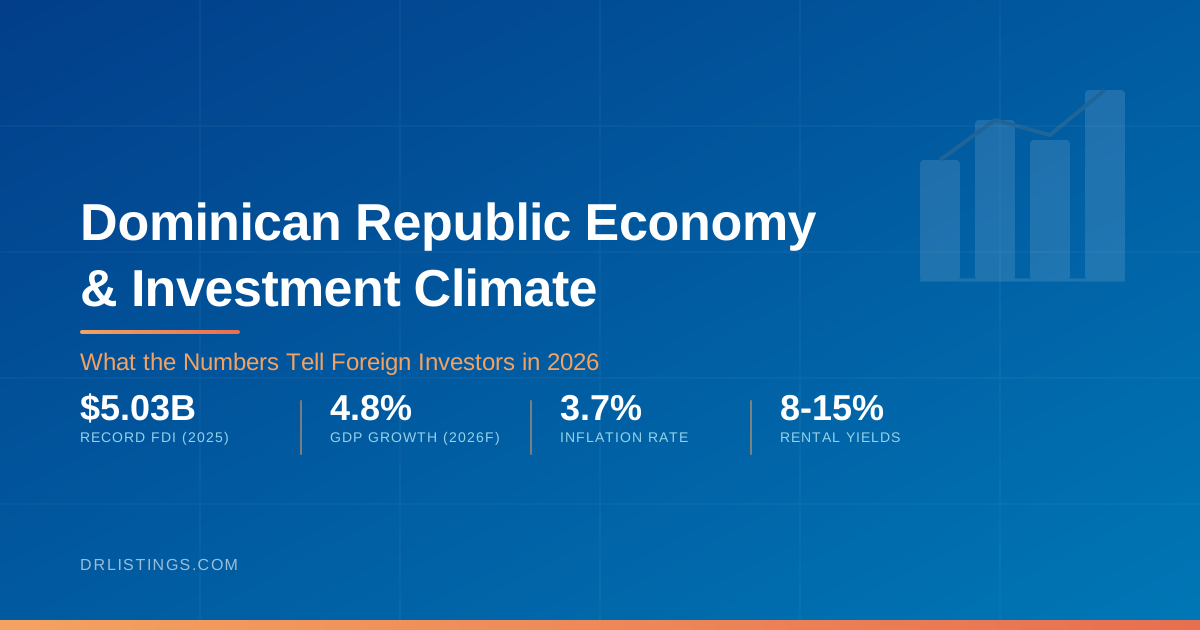
The Dominican Republic posted record foreign direct investment of $5.03 billion in 2025, its fourth straight annual record. GDP growth is projected at 4.5% to 4.8% for 2026, inflation sits at 3.7%, and foreigners enjoy equal property rights under Law 16-95. Strong basics, tourism growth, and tax breaks like CONFOTUR make the DR one of the Caribbean's most appealing places to put your money. For anyone tracking the Dominican Republic economy and investment trends, the numbers speak for themselves.
For Americans and Canadians looking at Dominican Republic real estate or business deals, the economic backdrop matters. Property values, rental demand, and currency stability all depend on the broader economy. This post breaks down the latest GDP data, FDI records, and export growth. It also covers fiscal policy and what each of these means for someone putting capital into the DR in 2026.
Dominican Republic GDP Growth and Economic Trajectory
The Dominican Republic has been one of the fastest-growing economies in Latin America for more than 50 years. The recent numbers keep the streak alive.
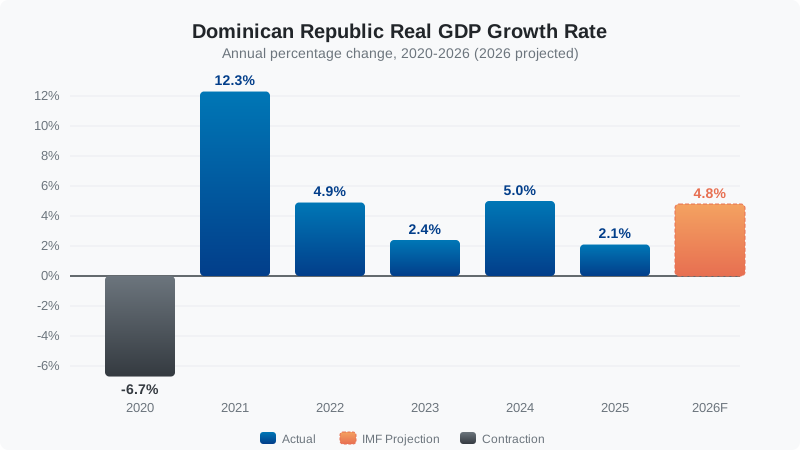
In 2024, real GDP grew 5%. That pushed the economy to roughly $124.5 billion in nominal terms (about $293 billion when adjusted for purchasing power). The DR is now the largest economy in the Caribbean and Central America by a wide margin.
2025 was tougher. Growth slowed to 2.1% after Hurricane Melissa hit the region. The government also deported a large share of the Haitian labor force working in construction, and the sector contracted for four straight quarters. That dip was real, but context matters. A 2.1% growth rate during a hurricane year and a major labor disruption still beats what most Caribbean economies managed.
The outlook for 2026 is strong. The IMF projects 4.5% to 4.8% real GDP growth, and Allianz Trade forecasts 4.5% to 5%. The Central Bank of the Dominican Republic (BCRD) is targeting a similar range. If those numbers hold, the DR will again be among the fastest-growing economies in the Western Hemisphere.
View text version of this infographic
Dominican Republic Real GDP Growth Rate (Annual percentage change):
2020: -6.7% (COVID contraction)
2021: 12.3% (post-COVID rebound)
2022: 4.9%
2023: 2.4%
2024: 5.0%
2025: 2.1% (Hurricane Melissa impact)
2026F: 4.5-4.8% (IMF projection)
Dominican Republic Foreign Direct Investment: Four Straight Records
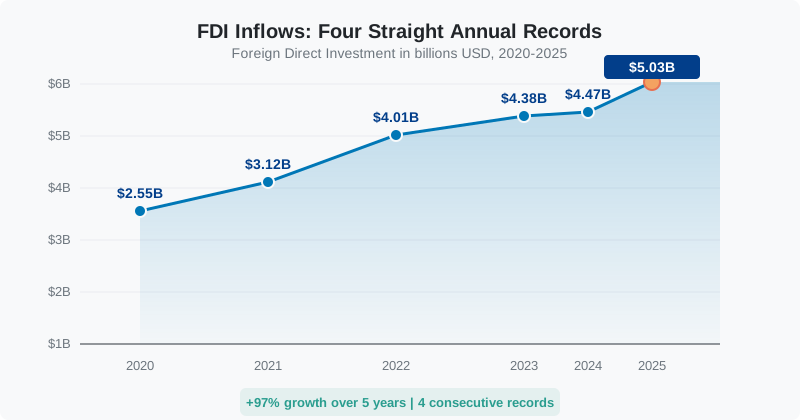
Foreign direct investment is where the Dominican Republic's story gets hard to ignore. FDI hit $5.03 billion in 2025, a new all-time high and the fourth year in a row the country has set an annual record. Over the past five years, FDI inflows have increased 97%.
View text version of this infographic
FDI Inflows to the Dominican Republic (billions USD):
2020: $2.55B
2021: $3.12B
2022: $4.01B (record)
2023: $4.38B (record)
2024: $4.52B (record)
2025: $5.03B (record)
Total growth over 5 years: +97%. Four consecutive annual records set from 2022 to 2025.
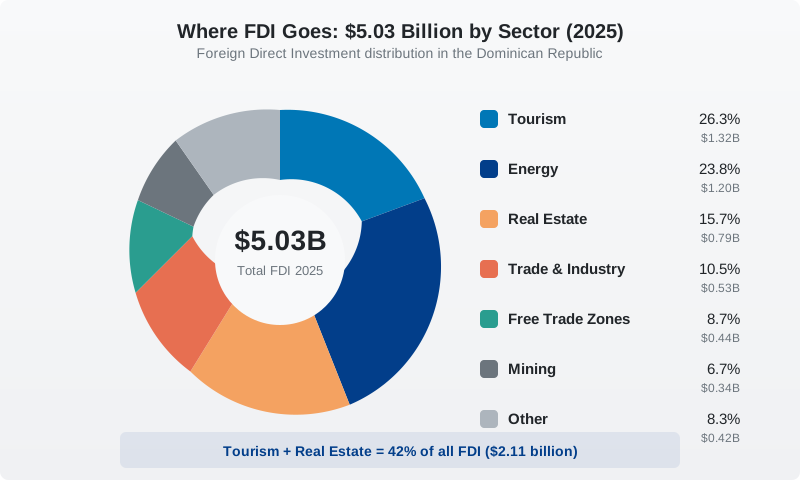
Here's where the money went in 2025:
Tourism: 26.3% of total FDI
Energy: 23.8%
Real estate: 15.7%
Trade and industry: 10.5%
Free trade zones: 8.7%
Mining: 6.7%
Tourism and real estate combined account for 42% of all foreign direct investment. That says two things: these sectors are mature enough to draw serious capital, and foreign investors are already betting heavily on continued growth in visitor numbers and property demand.
View text version of this infographic
Where FDI Goes: $5.03 Billion by Sector (2025):
Tourism: 26.3% ($1.32B)
Energy: 23.8% ($1.20B)
Real Estate: 15.7% ($0.79B)
Trade & Industry: 10.5% ($0.53B)
Free Trade Zones: 8.7% ($0.44B)
Mining: 6.7% ($0.34B)
Other: 8.3% ($0.42B)
Tourism + Real Estate = 42% of all FDI ($2.11 billion)
The United States remains the single largest source of FDI. Reinvestment rates top 60%, meaning most foreign investors who enter the market stay and expand rather than pulling out.
Export Growth and Mining Records
The DR's export numbers in 2025 were the strongest on record. Mining exports reached $2.59 billion, up 52% from the prior year. Gold and silver production led the way. Mining now accounts for more than 40% of total goods exports.
Free trade zones house over 800 companies and employ nearly 200,000 people. They exported $8.4 billion in 2024. January 2025 alone hit $559.8 million, a 3.1% increase year-over-year. National exports outside the free trade zones surged 42% in January 2025.
The country ships to more than 135 different markets. That spread reduces dependency on any single trading partner. Key export products include medical devices, gold, nickel, cocoa, and pharmaceutical products. This mix is a positive signal for investors because it means the economy isn't built entirely on tourism dollars.
Government Fiscal Policy: Fuel Subsidies and Inflation Control
One thing that sets the DR apart from many of its neighbors is how hard the government works to manage inflation. Since 2021, the Dominican government has spent more than RD$85 billion on fuel subsidies. These keep gas and diesel prices stable for consumers and businesses. Weekly subsidy amounts shift based on global oil prices, ranging from RD$92.6 million to RD$532.5 million.
The payoff is clear: inflation averaged just 3.7% in 2025, well within the central bank's target range. The monetary policy rate sits around 5.5%, and the BCRD has kept a lending-friendly stance that supports credit and construction.
For property investors, controlled inflation is a big deal. It protects the value of your investment, steadies construction material costs, and prevents currency swings that can wipe out returns. In 2024, the Dominican peso fell only 5% against the U.S. dollar despite global swings. Combined forex inflows of roughly $43.6 billion (from tourism, remittances, exports, and FDI) kept the peso supported.
Remittances: A Pillar of Stability With a Risk to Watch
Remittances are a major economic pillar that many foreign investors overlook. Dominicans living abroad sent home $10.75 billion in 2024, up 5.9% from the prior year. About 80.3% of that money comes from the 1.3 million Dominicans living in the United States. Another 6.3% comes from Spain.
This cash flow matters for real estate investors because remittances fuel local spending and housing demand. When families receive dollars from relatives in New York or Miami, a portion goes straight into home purchases, renovations, and rent payments. That steady demand supports property values from the bottom up.
The risk to watch: a 1% tax on outbound remittances from the U.S., signed into law in July 2025 as part of the "One Big Beautiful Bill Act," could cost the DR roughly $234 million per year according to the Center for Global Development. The Dominican government knows about this exposure and has been spreading its bets. The BPO (business process outsourcing) sector already brings in $250 million a year. Tech investment is growing. And mining revenue provides a buffer that didn't exist a decade ago.
What This Means for Real Estate Investors
The economic data paints a clear picture for anyone considering investing in the Dominican Republic in 2026. Tourism hit 11.6 million visitors in 2025, and early 2026 numbers point to another record year. Those visitors need places to stay, and short-term rental demand in Punta Cana, Santo Domingo, and Cap Cana reflects it.
Property prices have been climbing. Apartments rose 10.7% year-over-year and detached homes gained 11.6% as of May 2025, per Global Property Guide data. Rental yields in tourist-heavy areas range from 8% to 15%, based on location, property type, and management quality.
The government's CONFOTUR tax benefits cut the cost of investing. Properties in qualifying projects receive a 15-year property tax exemption and a waiver on the standard 3% transfer tax. You can browse CONFOTUR properties currently listed on the market.
Law 16-95 grants foreigners the same property ownership rights as Dominican citizens. There are no limits on foreign ownership, no special permits needed, and no caps on how much property you can hold. For a full walkthrough of the process, see our guide to buying property in the Dominican Republic.
Dominican Republic economic growth, record FDI, low inflation, and peso stability together create good conditions for both holding value and seeing gains. That doesn't mean the DR is risk-free, though.
Risks and Challenges to Consider
Every place you can invest has weak spots, and the Dominican Republic is no exception.
Informality is widespread. More than half of Dominican workers operate outside the formal economy. That limits tax revenue (currently 14% to 16% of GDP) and constrains the government's ability to fund roads, power, and public services.
Public debt sits around 59% of GDP. That's manageable by regional standards, but it leaves limited room if the economy hits a downturn.
Corruption remains a concern. Transparency International's 2024 CPI ranks the DR 104th out of 180 countries. The U.S. State Department's 2025 Investment Climate Statement flags uneven contract enforcement and rule changes as ongoing issues.
Land title issues persist. Many properties in the DR lack clear title paperwork. That makes due diligence and title checks a must before any purchase. Working with a Dominican real estate attorney is not optional.
Climate exposure is real. Hurricane Melissa's impact on construction in 2025 is a reminder that Caribbean economies face weather risks that mainland markets don't. Factor insurance costs and building standards into your planning.
Electricity is pricey and spotty in parts of the country. Power sector reform has stalled for years, and many properties rely on inverters and generators as backup.
None of these risks should stop you, but they are the kind of things that turn a good deal into a bad one if you don't plan for them. Read our Dominican Republic safety guide for more on living and investing in the country. You can also browse current listings to see what's available across the DR.
Frequently Asked Questions
Is the Dominican Republic a good place to invest in real estate?
The data supports it. Record FDI, rising property values (10-12% a year), rental yields of 8-15% in tourist areas, and CONFOTUR tax breaks make the DR one of the stronger real estate markets in the Caribbean. Foreign buyers have equal ownership rights under Law 16-95, and there are no limits on how much property you can hold.
How stable is the Dominican Republic economy?
The DR has been one of the fastest-growing economies in Latin America for over 50 years. GDP grew 5% in 2024, inflation is at 3.7%, and the peso has stayed fairly stable against the dollar. The economy spans tourism, manufacturing, mining, and farming. That spread gives it more staying power than single-sector island economies.
Can foreigners invest in the Dominican Republic?
Yes. Law 16-95 gives foreigners the same property ownership rights as Dominican citizens. There are no special permits, ownership caps, or nationality bars. The DR is also part of CAFTA-DR, which gives U.S. investors added legal protections.
What are the tax benefits for investing in the Dominican Republic?
CONFOTUR (Law 158-01) offers qualifying property buyers a 15-year pass on annual property taxes and a waiver on the 3% transfer tax. These benefits apply to properties in approved tourism and growth zones, which cover most of the popular coastal areas where foreigners buy.
What is the GDP growth rate of the Dominican Republic?
Real GDP grew 5% in 2024 and slowed to 2.1% in 2025 due to Hurricane Melissa and construction-sector trouble. The IMF projects a rebound to 4.5% to 4.8% in 2026, and Allianz Trade forecasts 4.5% to 5% growth for 2026 and 2027.
Is the Dominican Republic economy growing?
Yes. The DR has averaged among the highest growth rates in Latin America over the past half-century. Even during the 2025 slowdown (2.1% growth), the economy still expanded. GDP is projected to return to 4.5% to 4.8% growth in 2026, driven by tourism recovery, mining exports, and a pickup in construction.
What are the risks of investing in the Dominican Republic?
The main risks are land title problems (many properties lack clear paperwork), corruption and uneven rule enforcement, hurricane exposure, an unreliable power grid, and a large informal economy that limits government revenue. Proper due diligence and working with a qualified local attorney can reduce most of these risks.
What sectors attract the most investment in the Dominican Republic?
Tourism leads at 26.3% of all FDI, followed by energy (23.8%), real estate (15.7%), trade and industry (10.5%), free trade zones (8.7%), and mining (6.7%). Tourism and real estate together account for 42% of all foreign direct investment flowing into the country.
Sources
Written by
David Logan
Contributing writer for DRListings.com, sharing insights about Dominican Republic real estate.
Contact AuthorComments
Log in to join the conversation
Log In to Comment